A guide to
Charles-Valentin Alkan
Paris 1813 — Paris 1888
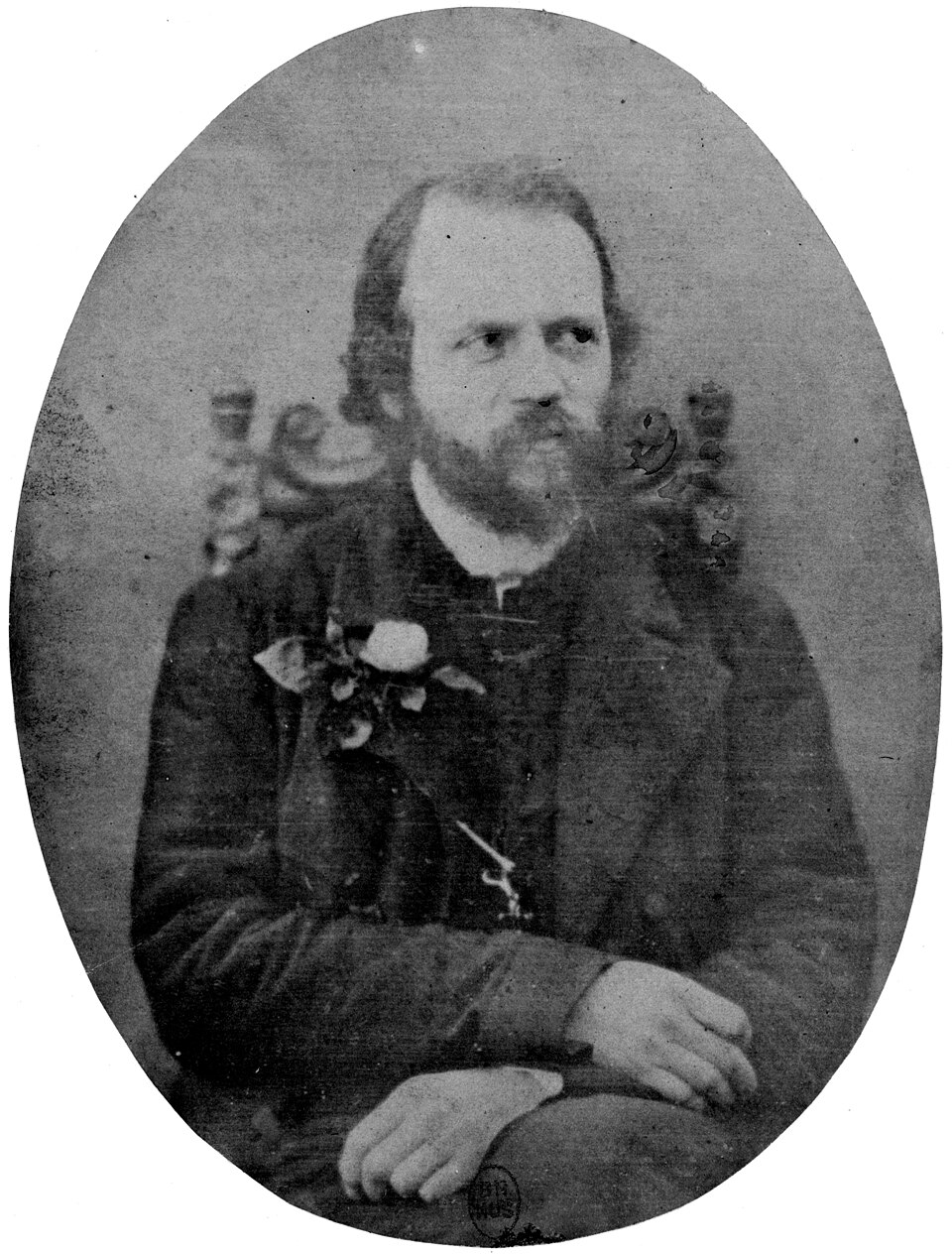
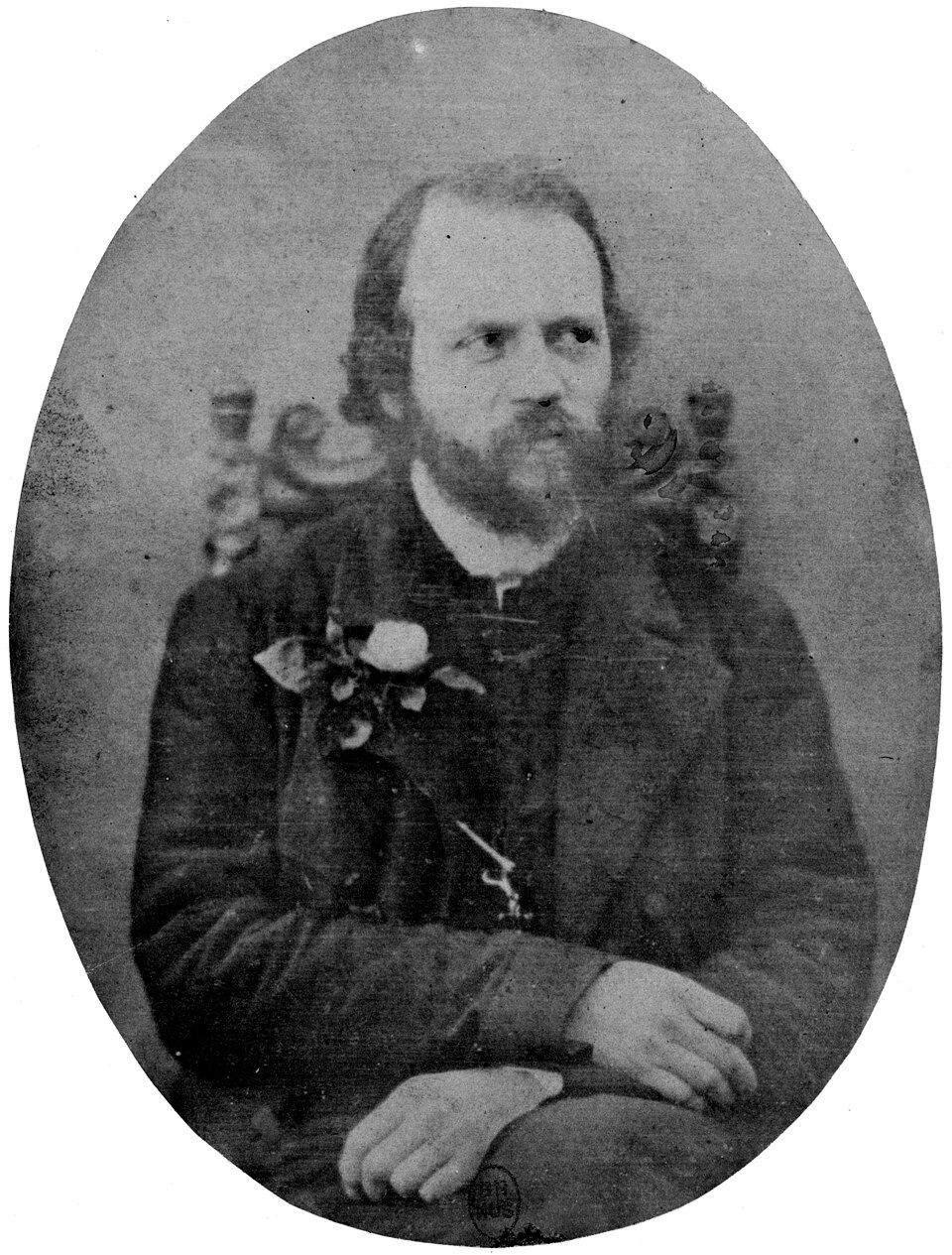
Charles-Valentin Alkan was the great recluse of Romantic music — a pianist the equal of Chopin and Liszt who turned his back on fame, and a composer whose vast, fiercely difficult keyboard music vanished after his death and was rediscovered only in the twentieth century. Born Charles-Valentin Morhange in Paris on 30 November 1813, into an observant Jewish family, he entered the Paris Conservatoire as a tiny child, studying piano under Joseph Zimmerman, and was made a joint professor of solfège there at fifteen.
In the 1830s and 1840s he stood among the foremost pianists of Paris, moving in the circle of Chopin — who on his deathbed in 1849 entrusted Alkan with completing his unfinished piano method — and of Liszt, who recommended him for a post in Geneva and praised his early music. He lived almost his entire life in Paris, much of it in the same building, the Square d’Orléans, where Chopin and George Sand had their apartments.
The great withdrawal
In 1848 the Conservatoire’s senior piano chair fell vacant, and Alkan — its obvious heir — was passed over in favour of a lesser figure. The wound seems never to have healed. He drew steadily away from public life, dressing in old-fashioned black, discouraging visitors, and devoting himself to composition and to a vast scholarly project: a complete French translation of the Hebrew and Greek scriptures, now lost. Yet from this seclusion came his greatest work, the Douze Études dans tous les tons mineurs, Op. 39 (1857), which contains within it a complete Symphony and a Concerto for solo piano — the latter running nearly an hour, with a first movement alone of some half-hour.
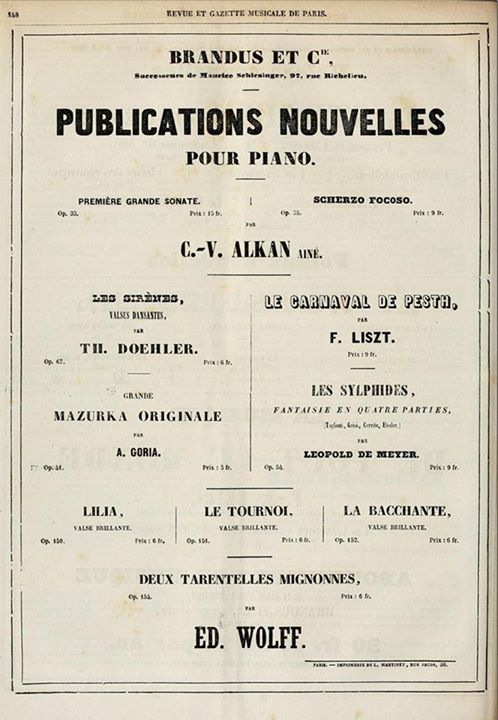
His music is famous for its difficulty, but the difficulty serves a strange and powerful imagination: the Grande Sonate “Les quatre âges” (Op. 33), which depicts a man at twenty, thirty, forty and fifty and grows darker as it ages; the savage Trois Grandes Études (Op. 76), one hand at a time; and a whole world of miniatures, marches and biblical pieces, including some of the first art music to draw openly on Jewish themes.
At the keyboard — and the pedalboard
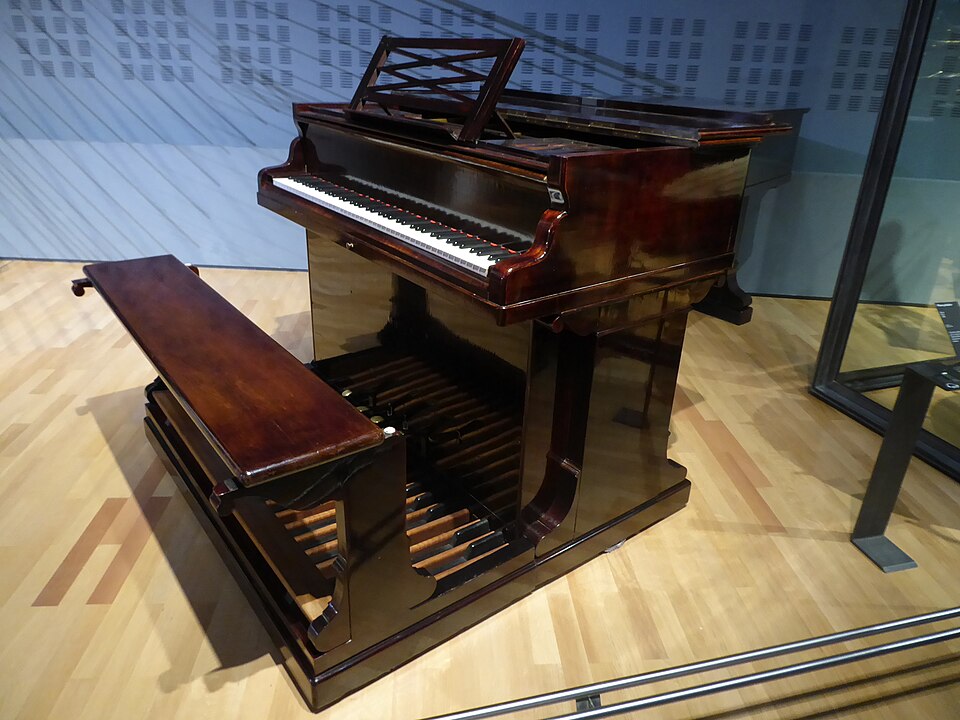
Alkan was almost alone among the Romantics in his devotion to the pedal piano — a piano fitted with an organ-style pedalboard played by the feet. For it he wrote the Douze Études pour les pieds seulement, studies for the feet alone, the Préludes et prières, and the Impromptu sur le Choral de Luther (Op. 69). These works, requiring an instrument that had all but vanished, were among the last of his music to be heard again. From 1873 he emerged briefly each year to give a series of Petits Concerts at the Érard rooms, playing Bach, Beethoven and his own music to a small devoted audience.
He died in Paris on 29 March 1888, aged seventy-four, and was buried in the Jewish section of Montmartre Cemetery. For decades a colourful legend held that a falling bookcase had killed him as he reached for a volume of the Talmud; the musicologist Hugh Macdonald later traced contemporary accounts showing he had in fact collapsed in his kitchen. His music slept until the pianist Ferruccio Busoni ranked him “with Liszt, Chopin, Schumann and Brahms as one of the five greatest composers for the piano since Beethoven,” and the English pianist Ronald Smith brought it fully back to life in the later twentieth century.