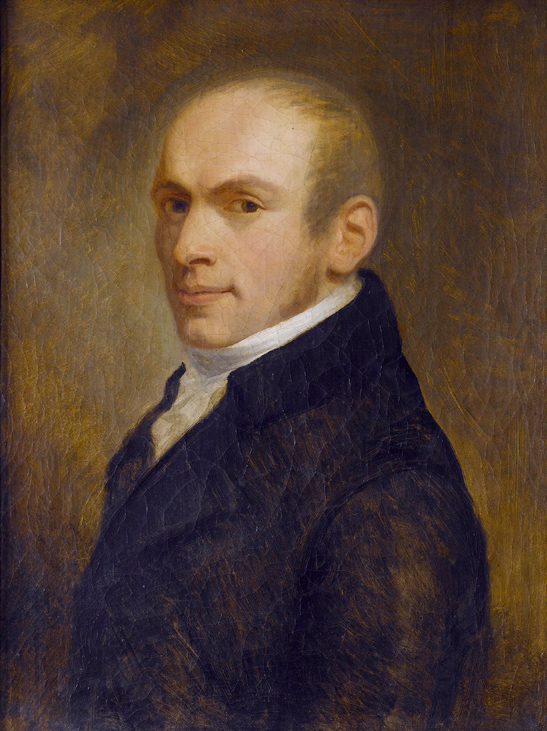

Bonifazio Asioli
1769 — 1832
Bonifazio Asioli was an Italian composer of classical and church music.
Adapted from the Wikipedia article on Bonifazio Asioli.
From the period sources
Bonifazio Asioli, an Italian composer and writer, showed prodigious talent from an early age, reportedly composing three masses, twenty other sacred works, a violin concerto, and pianoforte pieces by the age of eight, “without any previous theoretical instruction,” according to the Dictionary of Music (1896). He later studied under the organist Crotti and the violinist Angelo Morigi, a teacher “excellently spoken of as a teacher of composition” (Grove’s Dictionary, 2nd ed., Vol. 4, 1908). Asioli’s respect for his mentor was such that he posthumously published Morigi’s Trattato di contrappunto fugato.
Asioli held significant positions, serving as censor and professor of composition and singing at the newly established Milan Conservatorio from 1808, and as maestro di cappella to the Viceroy of Italy (Cyclopedia of Music and Musicians, 1888). His pedagogical influence extended through his theoretical works, including Principj Elementari di Musica, which saw seven editions and was translated into French, English, German, and Dutch (Grove’s Dictionary, 1904). However, his compositions, while numerous, were considered by Grove’s Dictionary (2nd ed., Vol. 4, 1908) to be among those by “inferior composers” whose songs were “too weak to stand the test of time.” Despite this, his teaching legacy is notable, with pupils like the celebrated soprano Giuditta Pasta studying under him at the Milan Conservatorio (Biographie universelle des musiciens, Vol. 7, 1837).