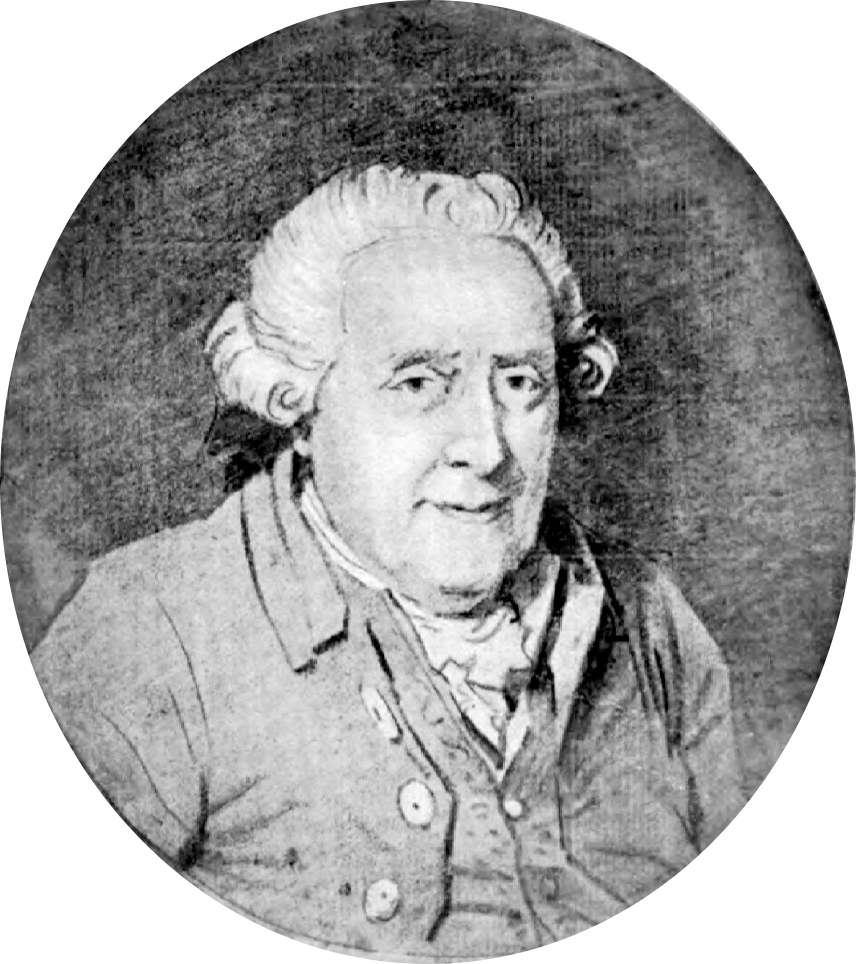

Wilhelm Friedemann Bach
1710 — 1784
Wilhelm Friedemann Bach was a German composer, organist and harpsichordist. He was the second child and eldest son of Johann Sebastian Bach and Maria Barbara Bach. Despite his acknowledged genius as an improviser and composer, his income and employment were unstable, and he died in poverty.
Adapted from the Wikipedia article on Wilhelm Friedemann Bach.
From the period sources
The name Wilhelm Friedemann Bach appears in various historical contexts, though direct biographical details are sparse in these particular sources. For instance, the French Biographie universelle des musiciens (1883) notes that the cellist and composer Bernard Breuer received lessons for his instrument from “l’organiste Wilbelm Bach,” suggesting a role as an instructor. Later, in 1851, an Amsterdam organ concert commemorating the 101st anniversary of J. S. Bach’s death featured works by “Guillaume-Friedmann Bach,” as recorded in A General History of the Science and Practice of Music, Vol. 1 (1875) and the Biographie universelle des musiciens, Vol. 1 (1880). This indicates that his compositions were still performed and recognized in the mid-19th century, alongside those of his father and other notable figures like J. L. Krebs and Mendelssohn.