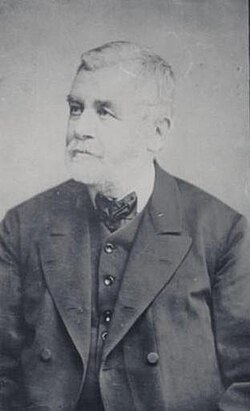

Ede Bartay
1825 — 1901
No external summary available for Ede Bartay.
From the period sources
Ede Bartay, who died in Budapest on August 31, 1901, was a significant figure in Hungarian musical life, following in the footsteps of his father, Andreas Bartay, who was himself a director of the Hungarian National Theatre in 1838 and a composer of operas, an oratorio, masses, and ballets, according to the Dictionary of Music (1896). Born on October 6, 1825, Ede Bartay became the director of the National Music Academy at Pest and founded the Hungarian “Musiker-Pensions-Anstalt,” a pension fund for Hungarian musicians, as noted in the Dictionary of Music (1896) and The New Encyclopedia of Music and Musicians (1924). He was also a composer, known for his overture Pericles, and was counted among the 19th-century Hungarian song-writers who adhered to the national school, as Grove’s Dictionary of Music and Musicians (1922) records. His work in opera, alongside Heinisch, preceded Franz Erkel’s “unmistakably successful” Maria Bathori in 1840, suggesting Bartay was an early contributor to the development of Hungarian national opera, according to Grove’s Dictionary (1908). From 1901, after Bartay’s directorship, the National Conservatorium in Pest was led by Erney, Gobbi, and Tomka, as detailed in The New Encyclopedia of Music and Musicians (1924).