
A guide to
Léon Boëllmann
Ensisheim, Alsace 1862 — Paris 1897
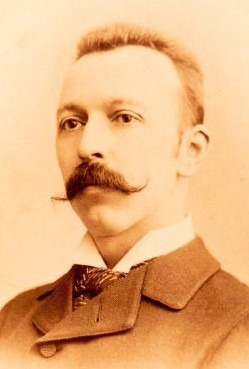
Léon Boëllmann is the composer of one piece almost everyone who has ever sat in a church has heard, even if they could not name it — the Toccata that ends his Suite gothique. It is one of the half-dozen most-played works in the whole organ repertory. Behind that single famous flourish lies a short, intense life: an Alsatian who died of tuberculosis at thirty-five, leaving some 160 compositions and three orphaned children, a working Paris church organist who in his brief career wrote one perfect, indestructible hit.
He was born in Ensisheim, in Alsace, on 25 September 1862, the son of a pharmacist. At the age of nine, in 1871 — the year his native Alsace passed to the new German Empire after the Franco-Prussian War — he was sent to Paris to enter the École Niedermeyer, the school dedicated to church music and the great traditions of plainsong and Renaissance polyphony. There he swept up first prizes in piano, organ, counterpoint, fugue, plainsong and composition, and there he came under the decisive influence of the organ professor Eugène Gigout, who would shape both his music and, in time, his family.
Saint-Vincent-de-Paul
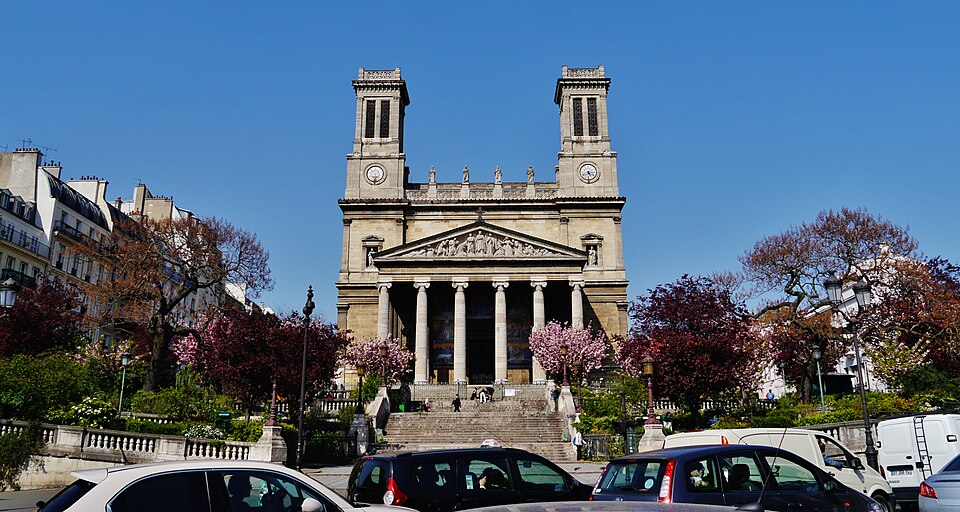
On graduating in 1881 Boëllmann was appointed organiste de choeur at the Church of Saint-Vincent-de-Paul in the 10th arrondissement — the great neoclassical church with its twin towers and pillared portico — and in 1887 he became its organiste titulaire, the post he held for the rest of his life. He bound himself still closer to Gigout: in 1885 he married Louise Lefèvre, Gigout’s niece, and moved into the older man’s household, also teaching organ and improvisation at Gigout’s own school.
His style belongs squarely to the post-Romantic French organ school — faithful, as the reference literature puts it, to the manner of César Franck and an admirer of Camille Saint-Saëns. He had a particular gift, one contemporary noted, for coaxing “pleasing sounds out of recalcitrant instruments.” He worked across every genre — a Symphony, chamber music including a fine Piano Quartet, songs, the Variations symphoniques for cello and orchestra that cellists still play — and even wrote criticism for L’Art musical under teasing pseudonyms such as “le Révérend Père Léon.”
The Suite gothique
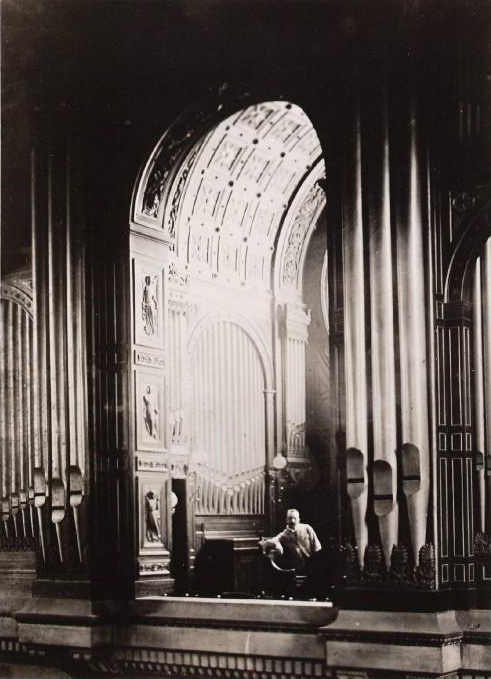
In 1895 Boëllmann composed the four-movement Suite gothique, Op. 25 — a solemn Introduction-Choral, a clipped Menuet gothique, the tender, prayerful Prière à Notre-Dame, and the closing Toccata that made his name immortal. The Toccata is a model of how to write a thrilling piece that lies within the reach of ordinary players: a murmuring perpetual-motion figure in the hands over a granite pedal theme, building to a blazing close, of (in the words of one catalogue) “moderate difficulty but brilliant effect.” It is a recital encore, a recessional, a war-horse — the piece that, more than any other, keeps his name alive.
The following year, in 1896, he produced the broader Deuxième Suite, Op. 27, and the large practical collection Les Heures mystiques, hundreds of short pieces for the organist’s daily liturgical round. He was, plainly, a composer still gathering force.
A life cut short
Boëllmann did not live to see where that force might have led. He died of tuberculosis in Paris on 11 October 1897, aged just thirty-five. His wife Louise died the following year, leaving three young orphans — among them Marie-Louise Boëllmann-Gigout (1891–1977), who would grow up to be a distinguished organ teacher in her own right. The children were taken in and raised by Eugène Gigout, closing the circle of teacher, family and tradition.
It is a melancholy thought that the Suite gothique — so confident, so full of life — is the work of a dying man in his early thirties, and that we will never know what the mature Boëllmann might have written. What we have is enough to keep his name in every organist’s repertory: one short life, and one Toccata that will not be forgotten.