A guide to
Antonio de Cabezón
Castrillo de Matajudíos, near Burgos 1510 — Madrid 1566
Antonio de Cabezón was the first great keyboard composer of the Iberian peninsula, and one of the foremost of the entire sixteenth century. Blind from early childhood, he rose to become the household organist of the Spanish royal family — of an Empress, an Emperor and a King — and travelled with the court across half of Europe, carrying his music to Italy, the Low Countries and England. His tientos and diferencias founded a Spanish keyboard tradition that runs straight down to Cabanilles, and his variations very likely touched the English virginalists at their source. No likeness of him survives; his music does, gathered by his son into one of the great keyboard prints of the age.
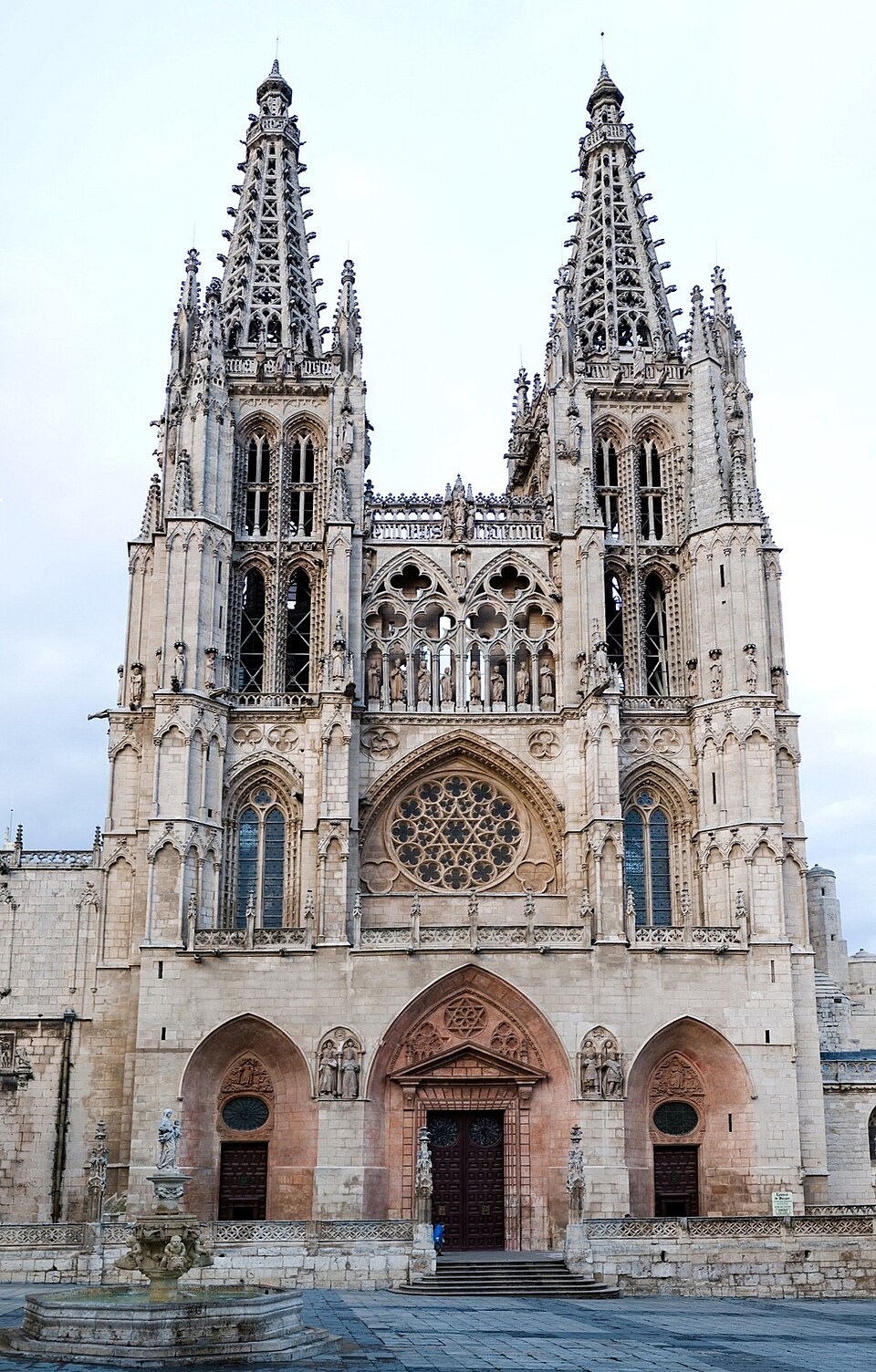
He was born about 1510 at Castrillo de Matajudíos, near Burgos, and lost his sight as a small child — possibly trained at Palencia Cathedral. In 1526 he entered the service of the Empress Isabella of Portugal, wife of Charles V, as a chamber keyboard player; on her death he taught her children, the future Philip II among them, and in 1538 was named músico de la cámara to the Emperor himself.
Organist to the King
In 1543 Cabezón became court organist to the young Philip, and from then on he was at the very centre of Habsburg musical life. He accompanied the prince’s great formative journeys — through Italy, Germany and the Netherlands in 1548–49, and to England in 1554–56 during Philip’s marriage to Mary Tudor. A blind man crossing and recrossing Europe in the entourage of the most powerful court of the age, hearing and being heard by the leading musicians of every country he passed through: it is hard to overstate how unusual a career this was, or how far his influence could travel because of it.
Tientos and diferencias
Cabezón’s surviving keyboard music falls into two great kinds. The tiento — Spain’s answer to the Italian ricercar, a grave imitative piece — he essentially established as a keyboard genre, and it became the backbone of Iberian organ music for the next century and a half. And the diferencias, sets of variations on a song or a dance such as El Canto del Caballero or the Italian pavan, are among the earliest variation cycles in all of European keyboard music; his treatment of a melody through successive elaborations is thought to have helped shape the variation art of Thomas Tallis and William Byrd, whose England he had visited.
The Obras de música
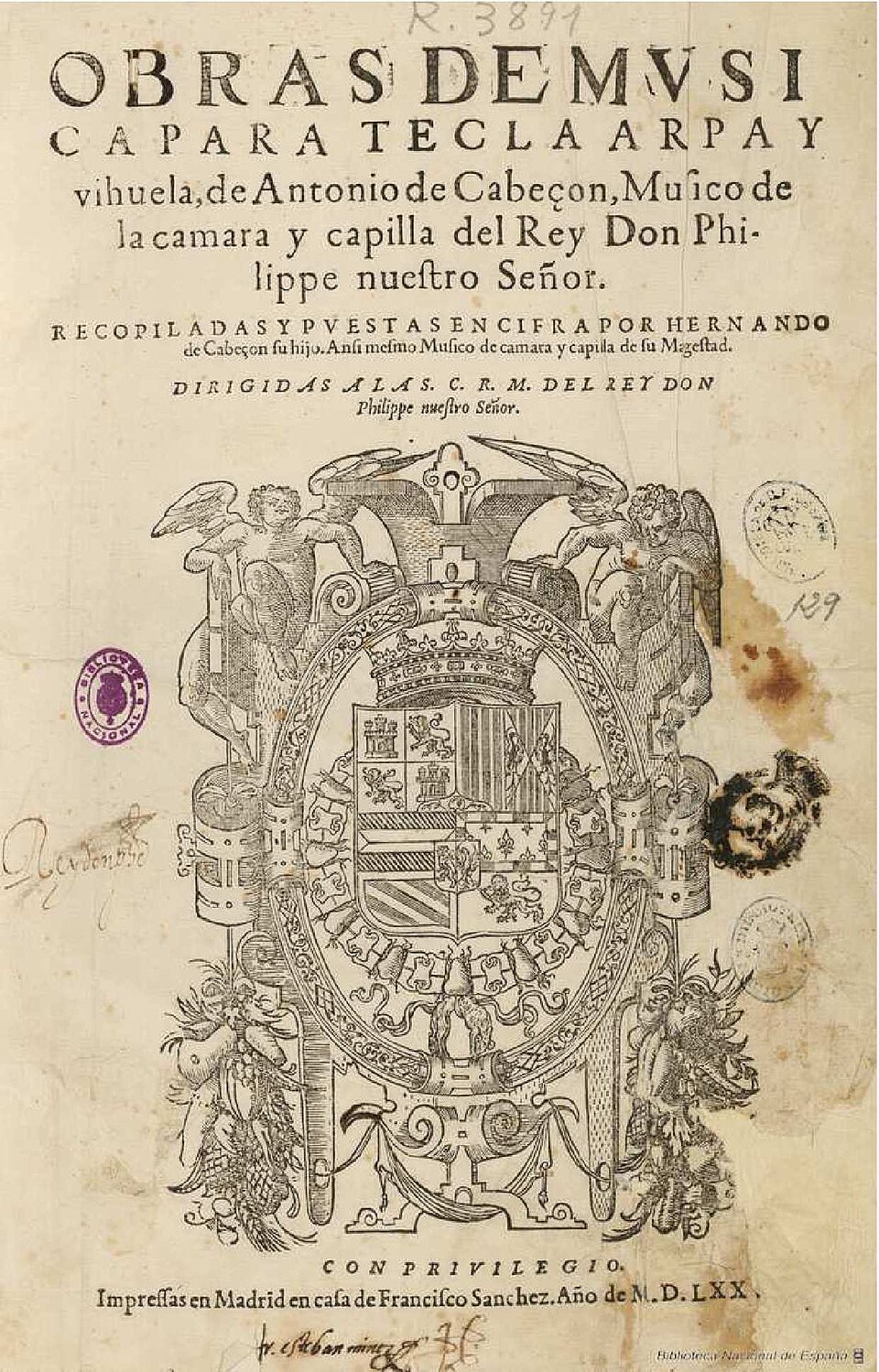
Cabezón died in Madrid on 26 March 1566. Twelve years later, in 1578, his son Hernando de Cabezón — himself a royal musician — published the great memorial volume, the Obras de música para tecla, arpa y vihuela (Works of music for keyboard, harp and vihuela), gathering some 275 pieces in Spanish keyboard tablature. It is the monument that preserves the father’s art, and the foundation document of the Spanish keyboard school: tientos, hymn settings, intabulations of motets, and the diferencias that made his name. Through it, the first major Iberian keyboard composer reached a posterity he could never have measured.