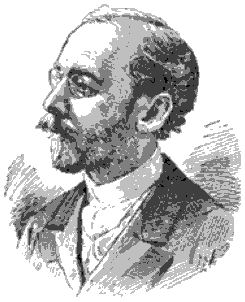

Louis Adolphe Coerne
1870 — 1922
Louis Adolphe Coerne was an American composer and music educator.
Adapted from the Wikipedia article on Louis Coerne.
From the period sources
Louis Adolphe Coerne, whose father was of Dutch and Swedish descent, received an early education in Germany and France before graduating from the Boston Latin School in 1888. He pursued his musical studies at Harvard University from 1888 to 1890, where he focused on harmony and composition with Paine and violin with Kneisel, according to The New Encyclopedia of Music and Musicians (1924). Coerne then continued his training at the Royal Academy in Munich, studying organ and composition with Rheinberger, and violin and conducting with Abel, graduating with highest honors in 1893.
Upon his return to Boston, Coerne conducted his symphonic poem ‘Hiawatha’ with the Boston Symphony Orchestra in 1894. His career included various conducting and academic posts, such as musical director for the Vocal Society and Liedertafel in Buffalo (1894-97), and professor at Smith College (1903-04). He spent periods abroad, composing and publishing, and notably completed and edited Rheinberger’s posthumous Mass in A minor, as recorded by The New Encyclopedia of Music and Musicians (1924). Coerne also authored The Evolution of Modern Orchestration (1908), for which he received the first Ph.D. from Harvard for special work in music. His opera ‘Zenobia’ premiered in Bremen in 1905, marking the “first performance in Europe of a grand opera by a native of the United States,” according to Grove’s Dictionary (1920).