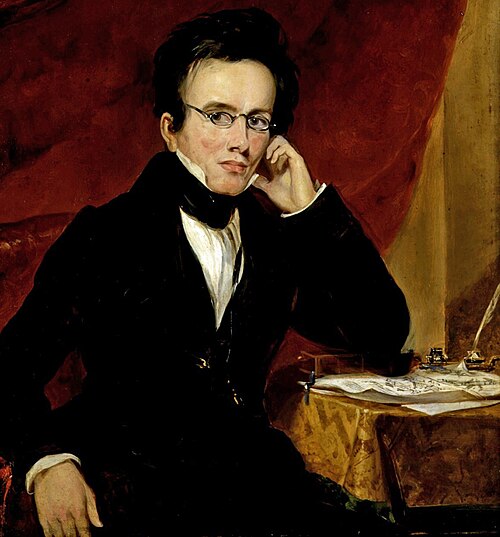

John Goss
1800 — 1880
Sir John Goss was an English organist, composer and teacher.
Adapted from the Wikipedia article on John Goss (composer).
From the period sources
Sir John Goss, an English musician, was born around 1800 and became a professor of harmony at the Royal Academy of Music in London, as well as organist of St. Paul’s Cathedral (Biographie universelle des musiciens, 1880; Cyclopedia of Music and Musicians, 1889). He was a notable teacher, with several prominent pupils including Sir John Frederick Bridge, who would later become principal organist at Westminster Abbey (Dictionary of Music, 1896), and Sir Arthur Sullivan, the first Mendelssohn Scholar (Famous Composers and Their Works, 1891). Sullivan’s biographer notes a “warm attachment” between master and pupil, which “loyally shared and returned by him” long after their formal relationship ceased (Famous Composers and Their Works, 1891). Goss also taught Frederic Hymen Cowen, who showed “evident talent for music” from the age of four (A Biographical Dictionary of Musicians, 1900), and William Alexander Barrett for composition (Biographical Dictionary of Musicians, 1886). His published works include an “Introduction to Harmony and Thorough-Bass” (Biographie universelle des musiciens, 1880), and he contributed to “The Supplemental Hymn and Tune Book” (Biographical Dictionary of Musicians, 1886). Goss was also a member of the council for the Musical Antiquarian Society (Grove’s Dictionary, 1906) and a committee member for the Mendelssohn Scholarship (Grove’s Dictionary, 1904). He retired from St. Paul’s in 1872, succeeded by Sir John Stainer (Cyclopedia of Music and Musicians, 1890).