.jpg)
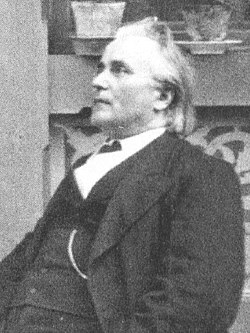
Alexander Wilhelm Gottschalg
1827 — 1908
No external summary available for Alexander Wilhelm Gottschalg.
From the period sources
Alexander Wilhelm Gottschalg, a German organist, writer, and composer, received his musical training from G. Töpfer at Weimar’s training-school, also benefiting from instruction by Liszt, according to the Dictionary of Music (1896, 1908). He began his career as a teacher at Tiefurt, near Weimar, in 1847. Later, in 1870, Gottschalg succeeded Töpfer at the Weimar Teachers’ Seminary, becoming court organist and, from 1874 to 1903, a teacher of music history at the Conservatory, as noted in The New Encyclopedia of Music and Musicians (1924).
Beyond his teaching and performance roles, Gottschalg was a significant figure in musical journalism. He edited the organ periodical Urania from 1865, a paper founded in 1844 by music publisher Gotthilf Wilhelm Körner (A Biographical Dictionary of Musicians, 1900). He also served as a musical critic for Dittes’s Pädagogischer Jahresbericht from 1872 and edited the musical paper Chorgesang from 1885. His publications include a Kleines Handlexikon der Tonkunst (1867) and a Repertorium für die Orgel, which he produced jointly with Liszt. Gottschalg also contributed to the historical record, with Johann Sebastian Bach: His Work and Influence on the Music of Germany, Vol. 1 (1899) noting that he “gives a large space” to Duke Wilhelm Ernst in his own historical writings. His autobiography was published in 1910, and he authored a work titled Liszt u. sein legendarischer Kantor (1908), referring to himself.