.jpg)
A guide to
Gottfried August Homilius
Rosenthal, Saxony 1714 — Dresden 1785
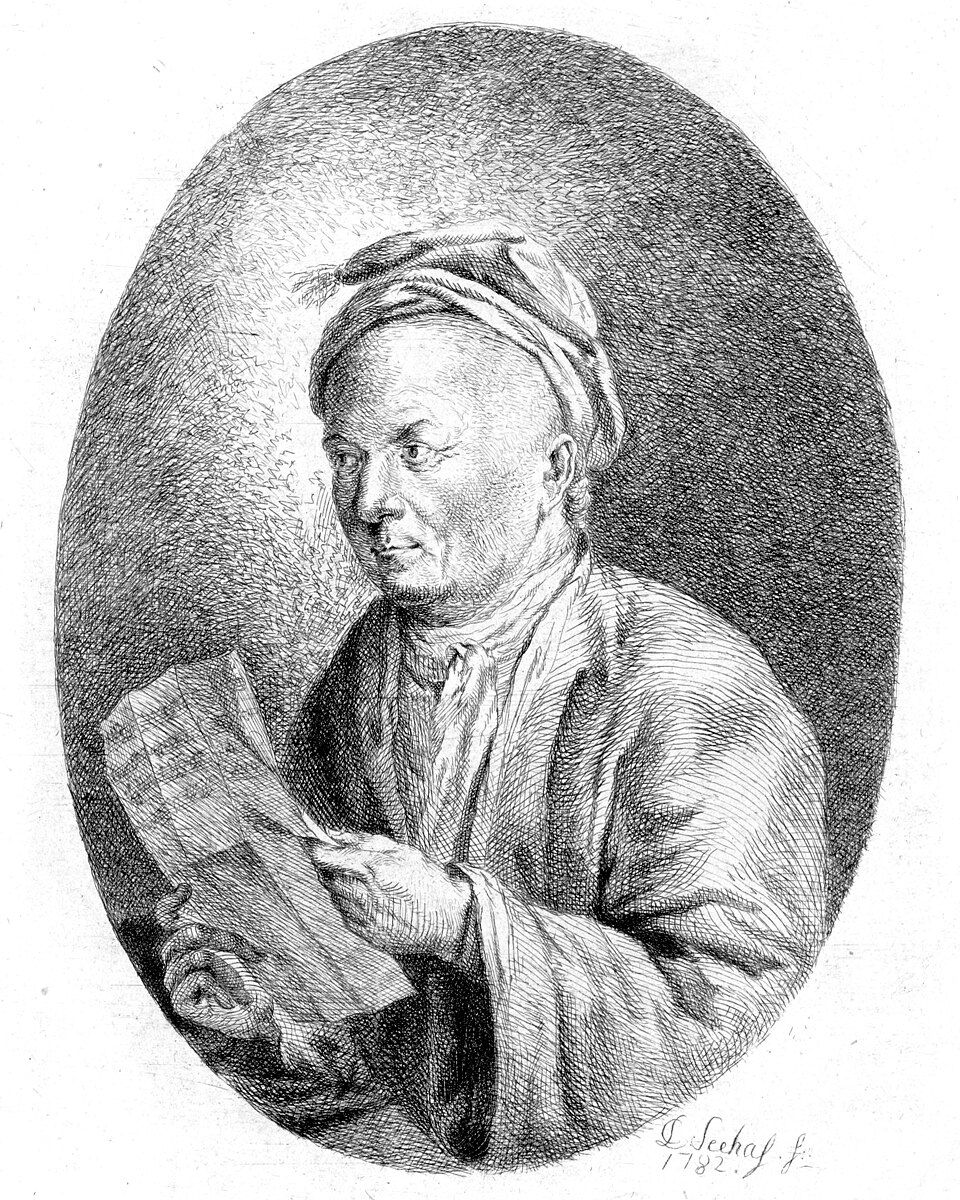
Gottfried August Homilius was, in the verdict of later scholars, “one of the most important church composers of the generation following Bach’s” — the leading representative of the empfindsamer Stil, the “sensitive style” that softened the rigour of the Baroque into something more directly expressive. He was born in Rosenthal, in Saxony, on 2 February 1714, and his whole mature career belonged to Dresden, the splendid capital of the Saxon electorate.
He studied law and organ at Leipzig University in the mid-1730s. Tradition has long held that he was a pupil of J. S. Bach during those Leipzig years — and his organ chorale preludes certainly stand in Bach’s direct line — but it should be said plainly that no contemporary document confirms the lessons, and some scholars doubt them. What is certain is the musical inheritance: Homilius took the Bachian chorale prelude and reshaped it for a new sensibility.
Dresden and the Kreuzkirche
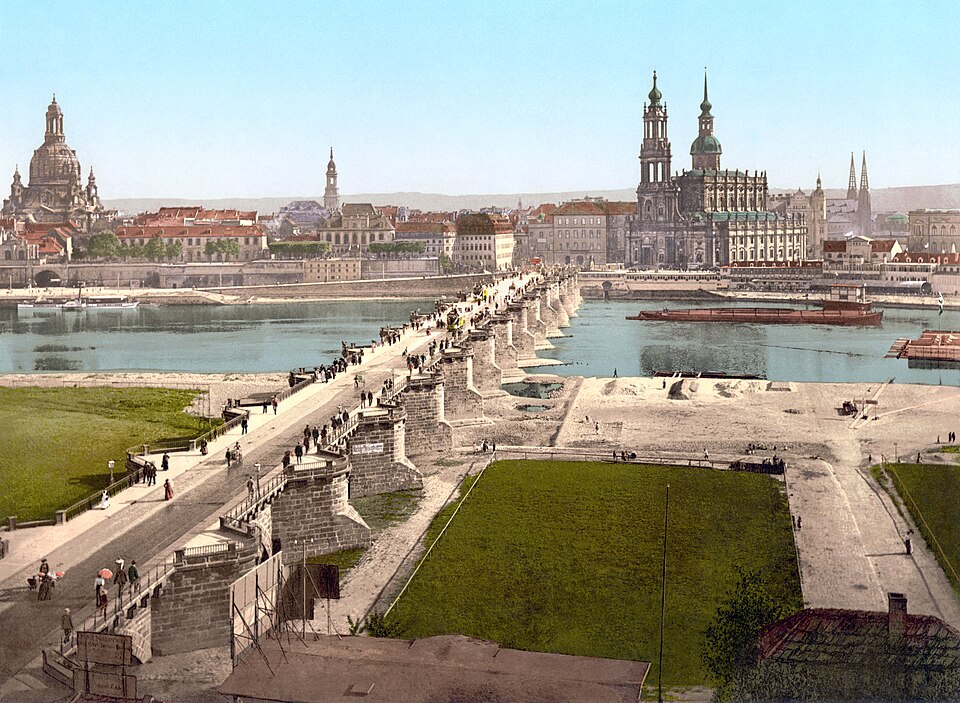
In 1742 Homilius was appointed organist of the Frauenkirche, the great domed church of Dresden. The decisive promotion came in 1755, when he became Kreuzkantor — cantor of the Kreuzkirche and music director of the city’s principal churches, a post broadly equivalent to the one Bach held in Leipzig, and one of the most prominent church-music positions in Protestant Germany.
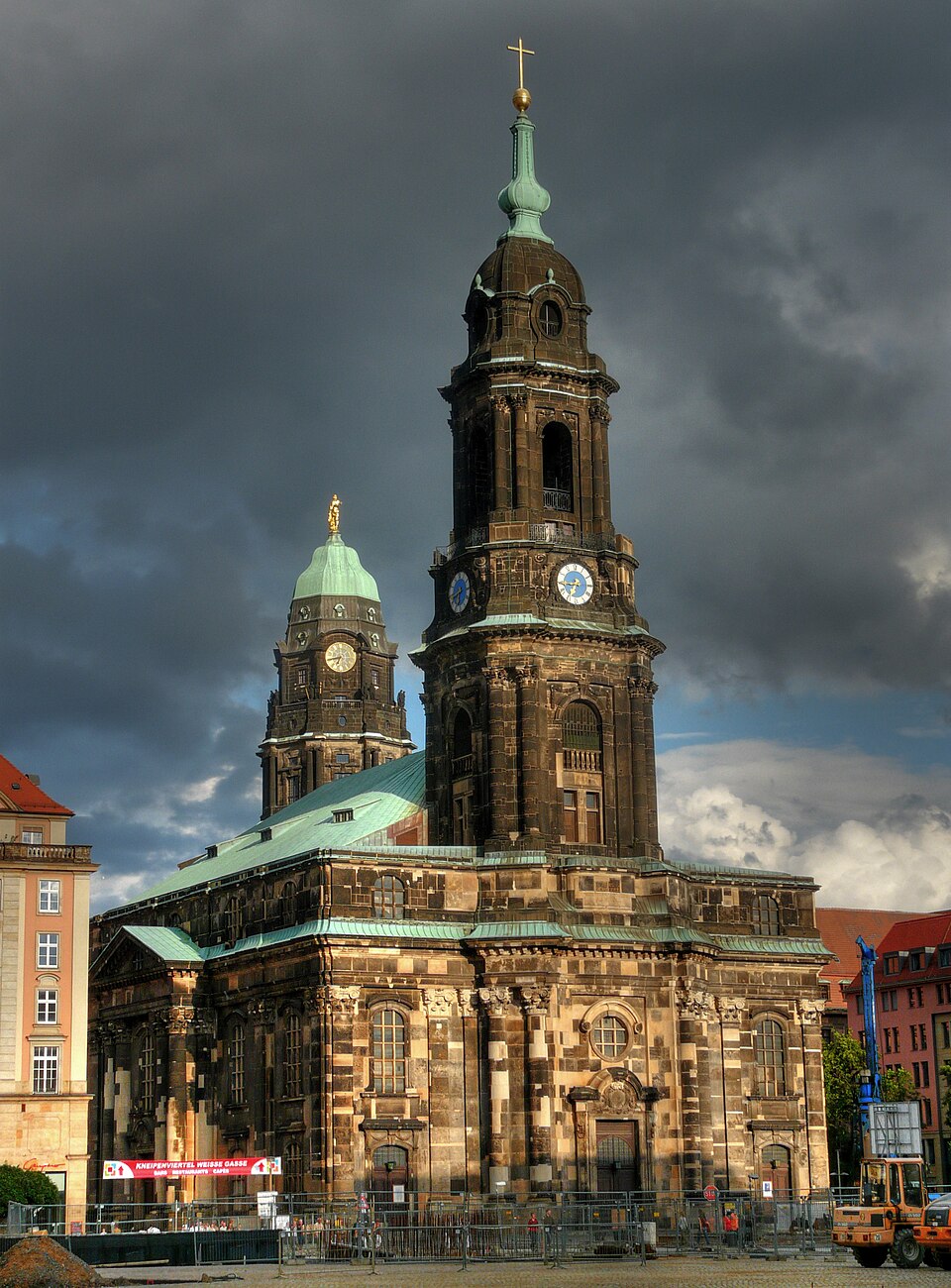
Disaster struck soon after: in 1760, during the Seven Years’ War, the Kreuzkirche was destroyed in the Prussian bombardment of Dresden, and for years Homilius carried on his duties mainly from the Frauenkirche. He held the cantorate, all the same, until his death — thirty years in the office that defined Dresden’s musical life.
The music
Homilius was extraordinarily prolific. He left over 150 cantatas, more than sixty motets, several full Passions for Good Friday, a Christmas oratorio (1777) and an Easter oratorio — a body of church music so large that its modern catalogue, the HoWV (Homilius-Werkverzeichnis), runs to many hundreds of entries. His motets in particular were sung across Germany for decades after his death; his pupils included the theorist Daniel Gottlob Türk and the composer Johann Adam Hiller.
For the organist, his lasting legacy is the set of chorale preludes — among them Schmücke dich, o liebe Seele — that show what became of the Bachian tradition in the hands of the next generation. The counterpoint loosens, the melody sings out more openly, the harmony reaches for a new tenderness: this is the chorale prelude on the threshold of the Classical age, written by a man who stood, by training or by spirit, only one step removed from Bach himself.