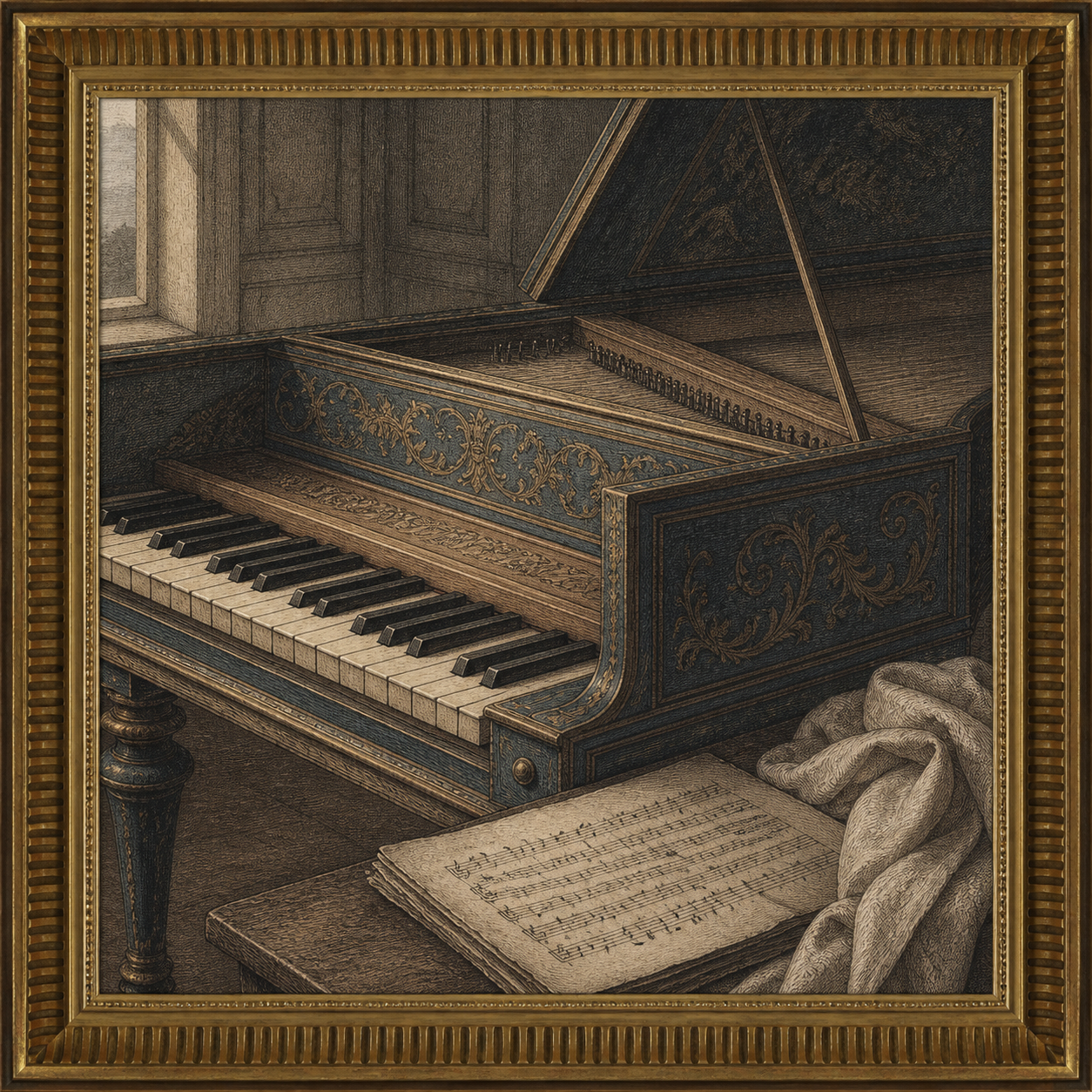
Johann Erasmus Kindermann
1616 — 1655
Johann Erasmus Kindermann was a German Baroque organist and composer. He was the most important composer of the Nuremberg school in the first half of the 17th century.
Adapted from the Wikipedia article on Johann Erasmus Kindermann.
From the period sources
Johann Erasmus Kindermann, a German organist and composer, was born in Nuremberg on March 29, 1616, and died there on April 14, 1655, according to the Biographical Dictionary of Musicians (1886, 1900). He held the significant post of organist at St. Aegidien in Nuremberg, a position he is said to have occupied as early as 1630, a detail that casts “some doubt” on his birth year, as noted in Grove’s Dictionary of Music and Musicians (1906). Kindermann was considered “one of the most famous performers on his instrument” (Cyclopedia of Music and Musicians, 1889). His published works include organ and vocal music, with a large number of sacred songs appearing up to 1652, as recorded in the Dictionary of Music (1896, 1908). His Harmonia Organica in tabulaturam Germanicam composita, first published in 1645, is particularly notable as “one of the earliest specimens of German copper-plate engraving” and holds importance in the history of organ playing and composition, featuring preludes, fugal fantasias on chorale-tunes, and Magnificat intonations with obbligato pedal parts (Grove’s Dictionary, 1906).