Luzzasco Luzzaschi
1545 — 1607
Luzzasco Luzzaschi was an Italian composer, organist, and teacher of the late Renaissance. He was born and died in Ferrara, and despite evidence of travels to Rome it is assumed that Luzzaschi spent the majority of his life in his native city. He was a skilled representative of the late Italian madrigal style, along with Palestrina, Wert, Monte, Lassus, Marenzio, Gesualdo and others.
Adapted from the Wikipedia article on Luzzasco Luzzaschi.
From the period sources
Luzzasco Luzzaschi, born in Ferrara in the sixteenth century, was a pupil of Ciprian de Rore before 1558, and later served as first organist at the court of Alfonso II, as well as maestro di cappella in his native city’s cathedral, according to the Cyclopedia of Music and Musicians (1889) and Grove’s Dictionary (1906). Vincenzo Galilei, a contemporary, ranked Luzzaschi among the four most distinguished musicians of his era, and The History of Music (1886) considered him “the greatest organist of his time.” He was a significant teacher, notably instructing the famous organist and composer Girolamo Frescobaldi, as recorded in A Biographical Dictionary of Musicians (1900) and A History of Pianoforte-Playing (1897).
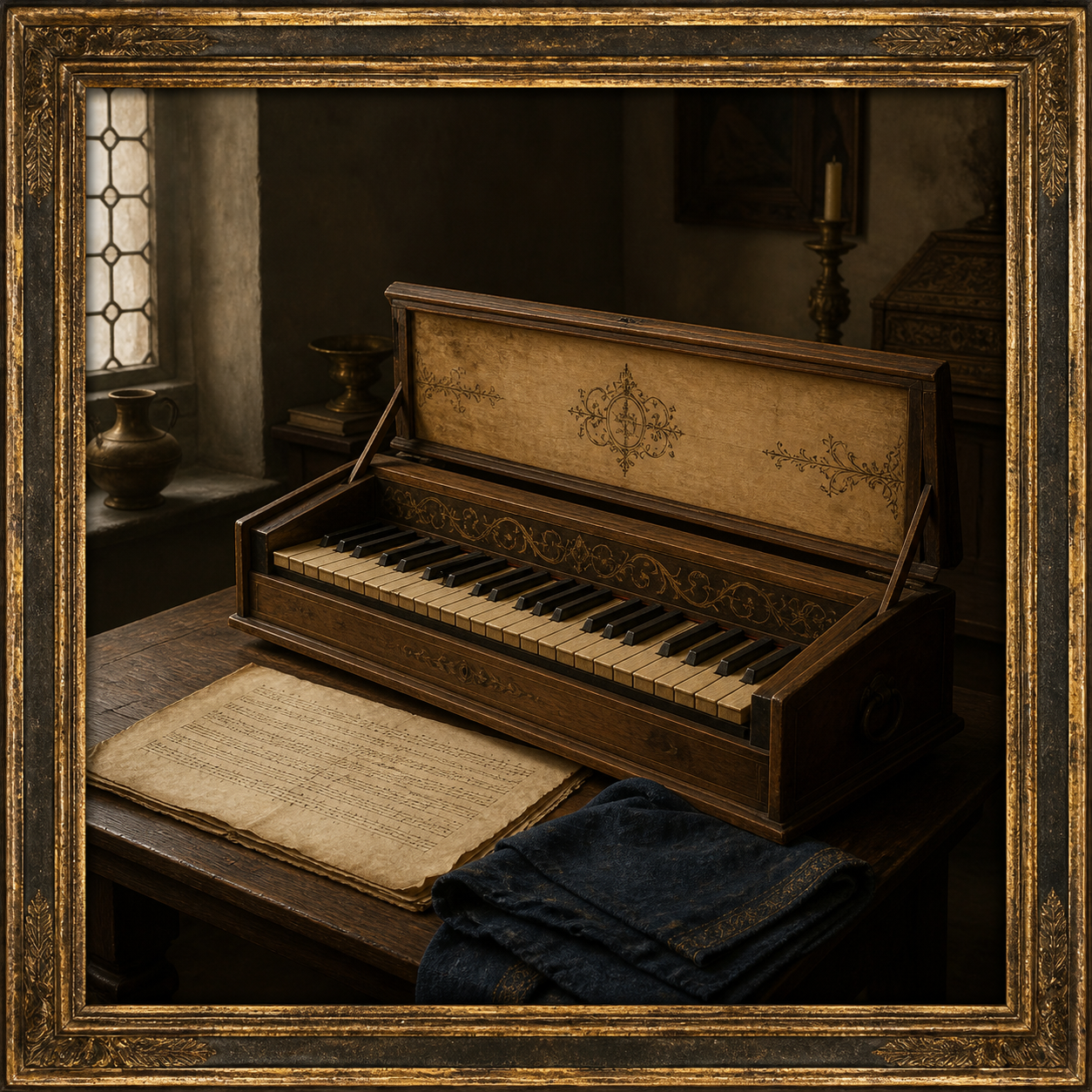
Luzzaschi was known for his excellent organ ricercari and for attempting to revive the enharmonic system of tones used by the Greeks, even having a clavier built to play diatonic, chromatic, and enharmonic modes, a fact noted in A History of Pianoforte-Playing (1897). His compositions, including five volumes of madrigals published between 1575 and 1584, were featured in important pedagogical works. Girolamo Diruta’s Il Transilvano (1625), a foundational organ and harpsichord method, included Luzzaschi’s toccatas and examples of his counterpoint, highlighting his influence on keyboard technique and composition, as detailed in A General History of the Science and Practice of Music (1875) and Grove’s Dictionary (1904). His work was also drawn upon by Lorenzo Penna for his treatise on thorough-bass, Albori Musicale (1672), according to A General History (1875).