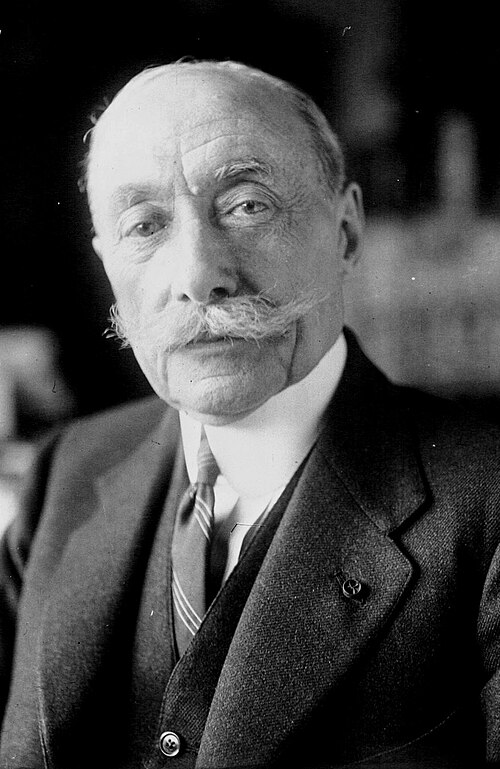

André Messager
1853 — 1929
André Charles Prosper Messager was a French composer, organist, pianist and conductor. His compositions include eight ballets and thirty opéras comiques, opérettes and other stage works, among which his ballet Les Deux Pigeons (1886) and opéra comique Véronique (1898) have had lasting success; Les p’tites Michu (1897) and Monsieur Beaucaire (1919) were also popular internationally.
Adapted from the Wikipedia article on André Messager.
From the period sources
André Messager, a pupil of the Niedermeyer School and later of Saint-Saëns, began his career as an organist, serving at St.-Sulpice in 1874, then at Saint-Paul-Saint-Louis, and later as maître de chapelle at Sainte-Marie des Batignolles. He also held the position of chef d’orchestre in Brussels, before being appointed orchestral conductor of the Opéra-Comique by Carre in 1898, according to A Biographical Dictionary of Musicians (1900). Messager first gained notice for several ballets at the Folies-Bergère. His stage works include the 3-act comic opera François les bas bleus, produced in 1883 at the Folies-Dramatiques, which completed Bernicat’s unfinished score. Among his approximately twenty subsequent stage pieces, the operettas La Fiancée en loterie (1896), Les p’tites Michu (1897), and Véronique (1898) all achieved success, as noted in A Biographical Dictionary of Musicians (1905). His 3-act comic opera La Basoche (1890) was notably produced in Bremen in 1892 under the title Zwei Könige. Messager also collaborated with Georges-Ernest Street on the ballet Scaramouche in 1891, and Street, a music critic for “Le Matin” and “L’Eclair,” later gave lectures on Messager, as recorded in A Biographical Dictionary of Musicians (1905). The poet Catulle Mendes, known for libretti for popular operas, also wrote the text for Messager’s Isoline. For his contributions, Messager was recognized as a Chevalier of the Legion of Honor.