A guide to
Georg Muffat
Megève, Savoy 1653 — Passau 1704
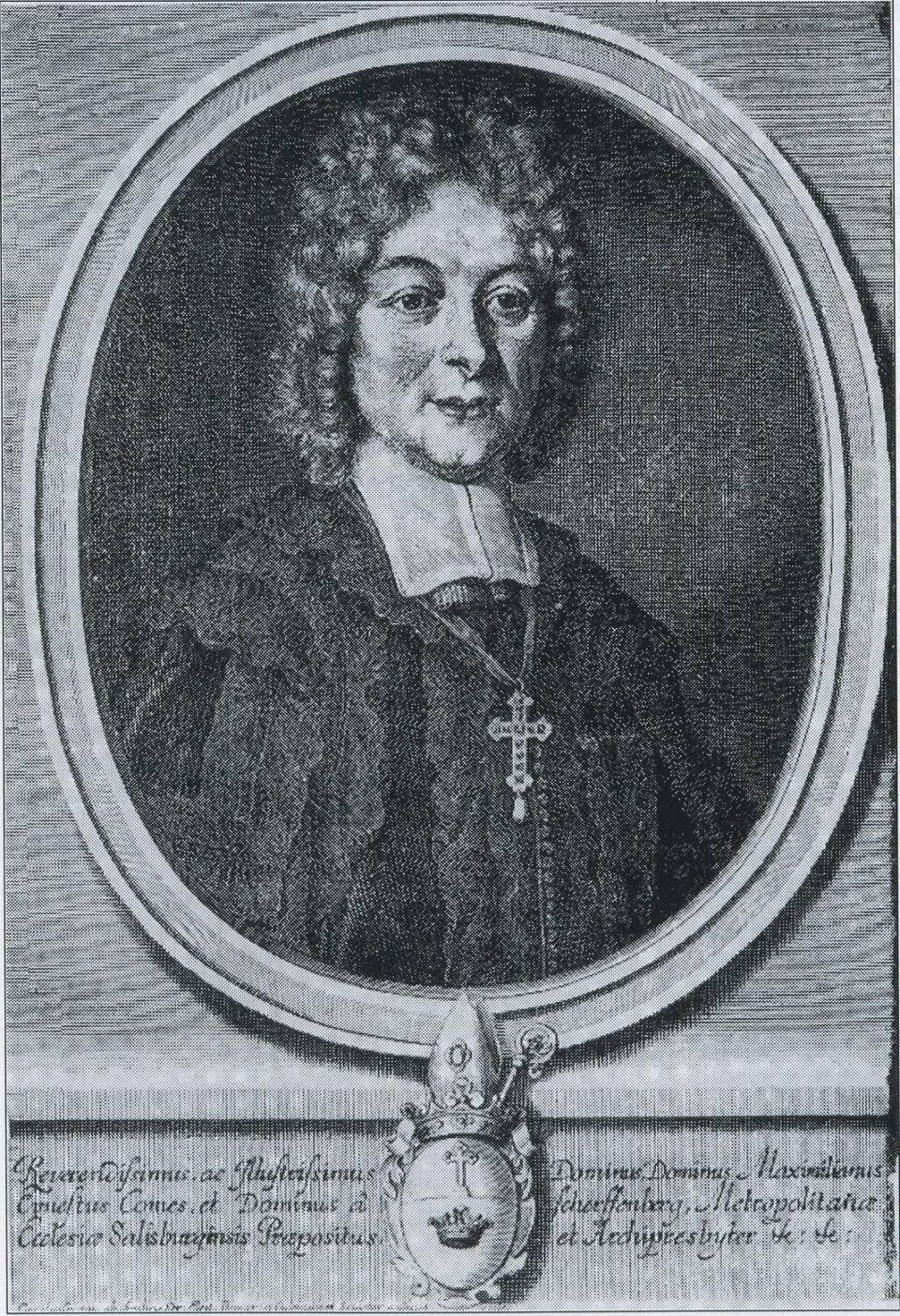
Georg Muffat was the great cosmopolitan of the German Baroque — a composer who carried the French style north from Paris, the Italian style north from Rome, and welded them into something that the German-speaking lands had not heard before. Born a subject of the Duke of Savoy, trained in France, polished in Italy, employed in Salzburg and Passau, he stands with Froberger as one of music’s supreme cultural couriers. To organists he is above all the author of the Apparatus Musico-Organisticus of 1690; to string players he is the man whose printed prefaces still teach how Lully’s orchestra actually played.
He was born in Megève, in the Duchy of Savoy, on 1 June 1653, of a family of Scottish descent. From 1663 he spent six years studying in Paris, drinking in the French style then flowering under Lully — though whether he studied with Lully directly the sources leave teasingly unclear. He held organ posts at Molsheim and Sélestat, studied law at Ingolstadt, and after a restless period reached Salzburg, where he served the Prince-Archbishop for about a decade.
Rome, and the Italian style
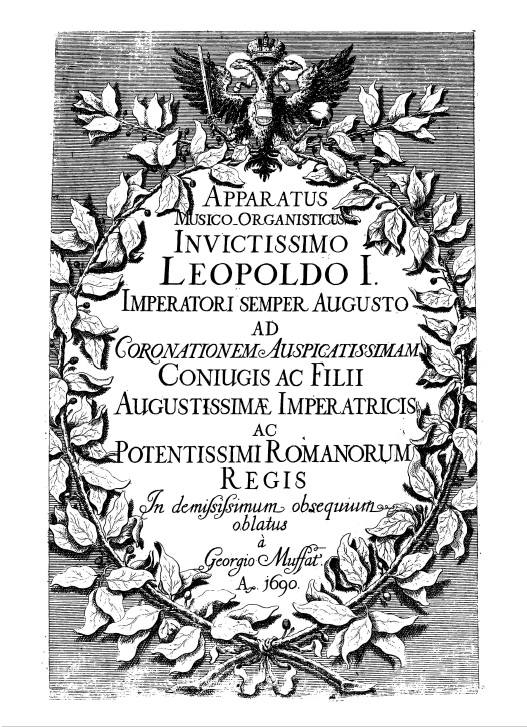
Around 1680 Muffat went to Rome, and the journey shaped him decisively. There he studied the organ with Bernardo Pasquini, an inheritor of Frescobaldi’s tradition, and he heard and admired the new music of Arcangelo Corelli — whose concerto style he would later carry back over the Alps. The fruit of his organ years is the Apparatus Musico-Organisticus, printed in 1690 and dedicated to the Emperor Leopold I: twelve toccatas of grand improvisatory sweep, a passacaglia, a chaconne and an aria with variations. It is the most imposing German organ publication of its generation, and the clearest surviving witness to how the Italian toccata sounded in the hands of Frescobaldi’s heirs.
The performance prefaces
The year of the Apparatus Muffat also became Kapellmeister to the Bishop of Passau, a post he held until his death. From Passau came the orchestral suites of the Florilegium Primum (1695) and Florilegium Secundum (1698), and these carry his most famous legacy of all: detailed printed prefaces explaining, for German players unfamiliar with the French manner, exactly how to bow, how to take the tempo, how to ornament and balance the ensemble in the style of Lully. They are among the most valuable performance documents of the entire Baroque — the reason modern players can reconstruct how the music of his time was actually delivered.
An important figure in the exchange between the European musical traditions.
That role — comparable, it has been said, to Froberger’s and to Handel’s — is Muffat’s lasting historical place. He brought France and Italy into German music and explained, in print, how to perform them.
Passau and after
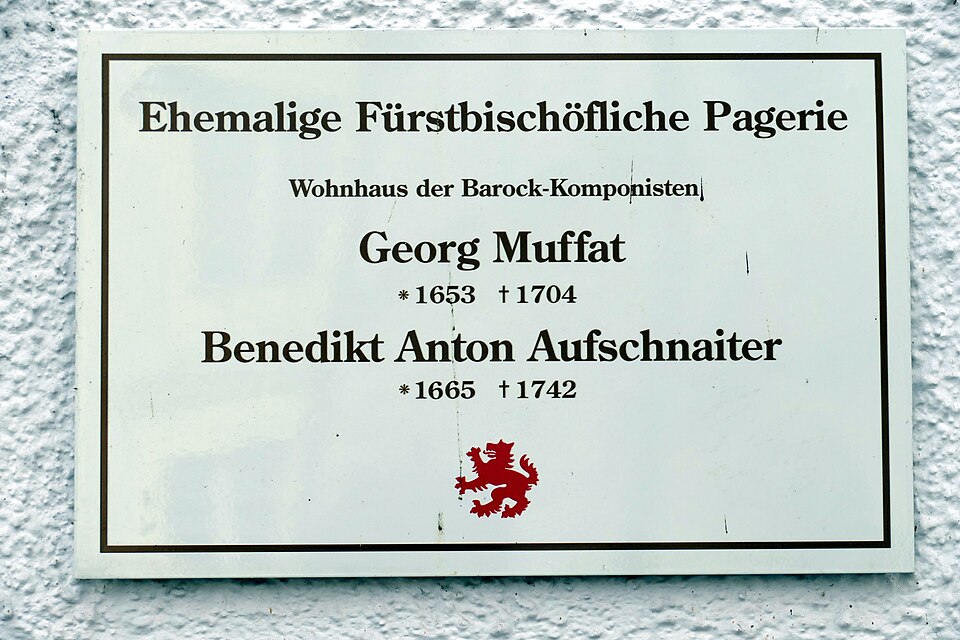
Muffat died at Passau on 23 February 1704, aged fifty. Most of his sacred music and his three operas are lost; what survives — the organ Apparatus, the Armonico tributo of 1682, the Florilegia and the late concerti grossi — is enough to mark him as one of the pivotal figures of his age. His son Gottlieb Muffat carried the family name into the next generation as a distinguished keyboard composer at the Imperial court in Vienna. But it is the father, the traveller who made German music speak French and Italian, who left the deeper mark.