
A guide to
Samuel Scheidt
Halle, Saxony 1587 — Halle, Saxony 1654
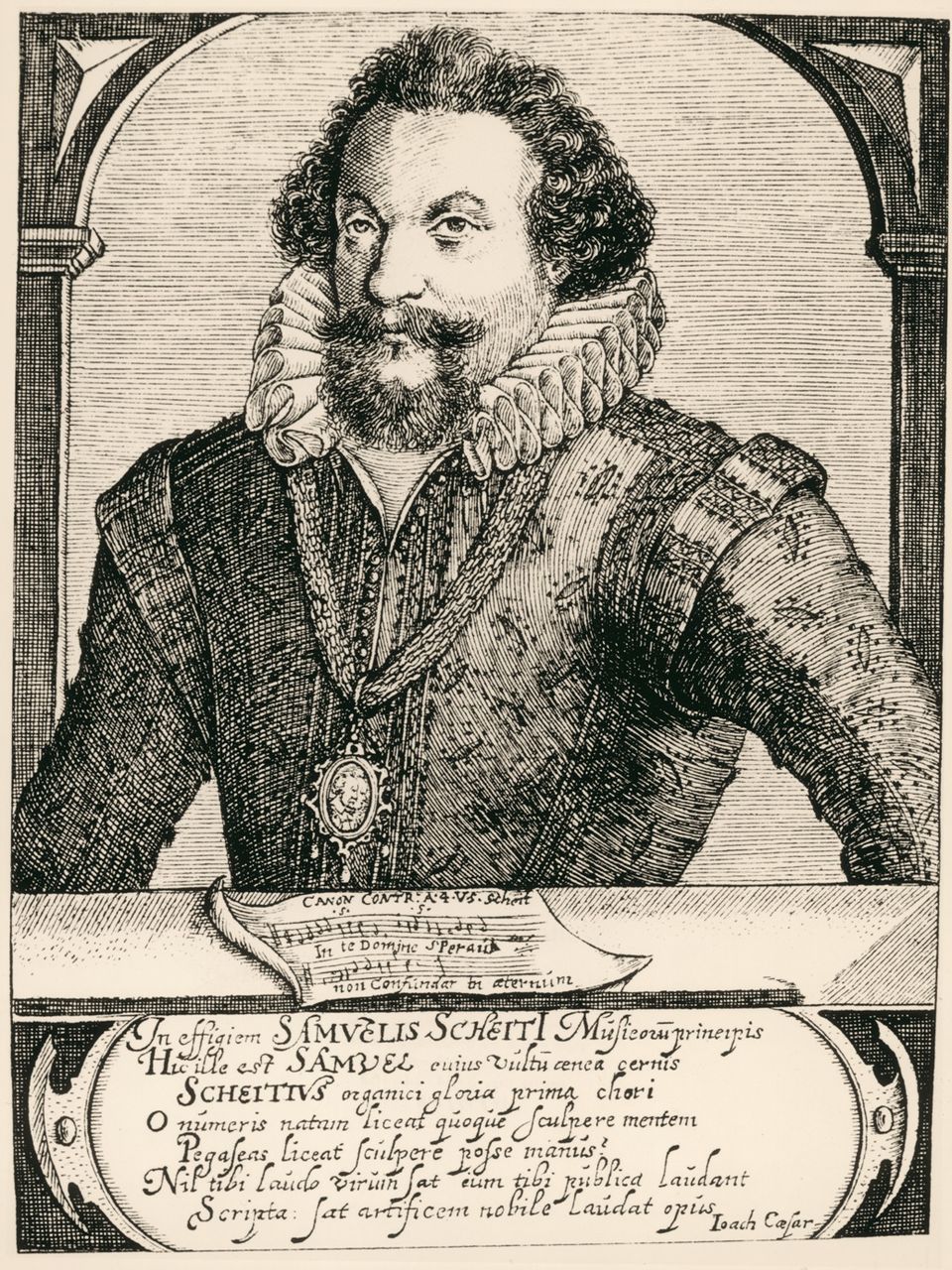
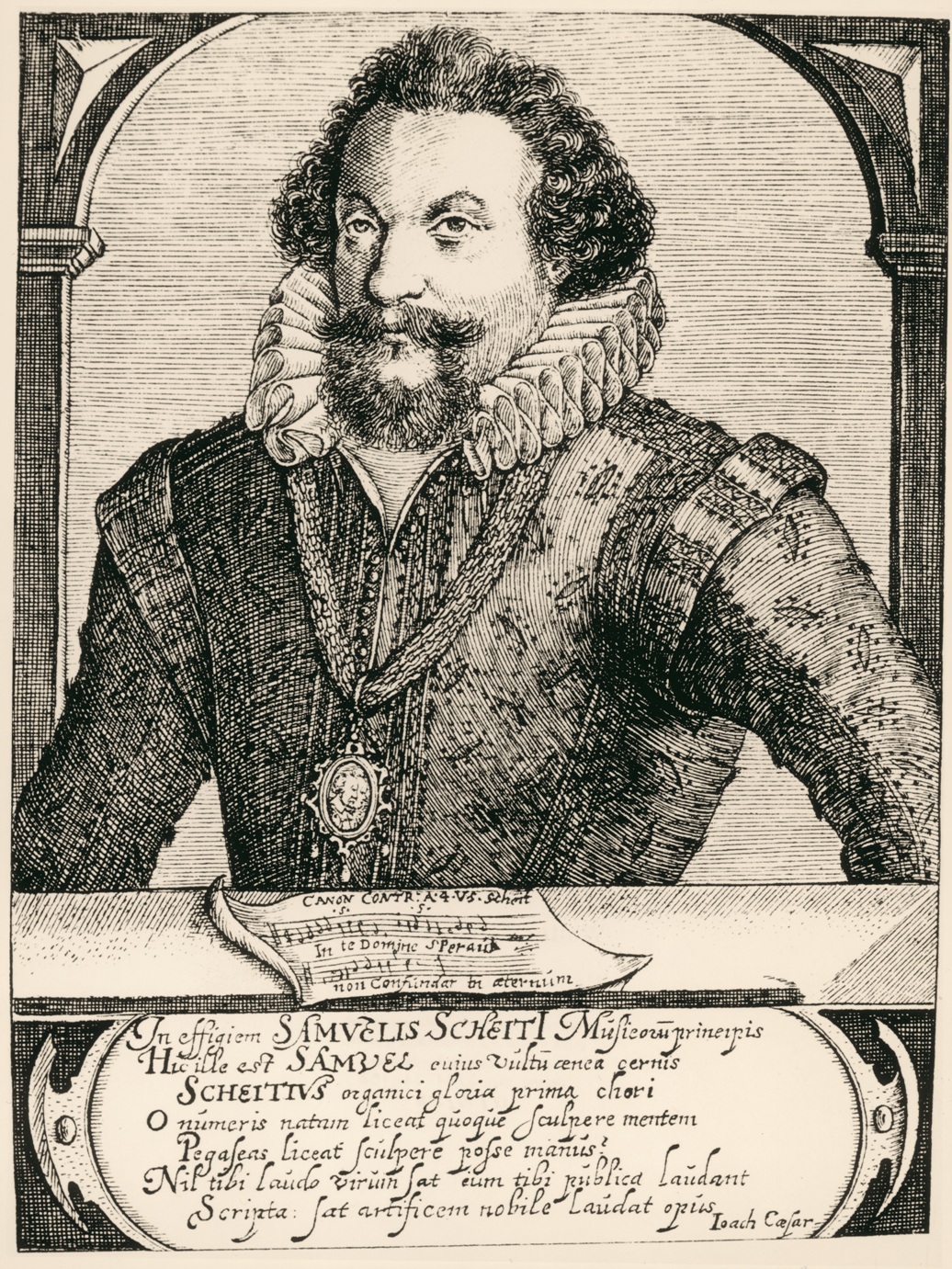
Samuel Scheidt was the first internationally significant German composer for the organ — the man who took the brilliant keyboard art of the Netherlands, brought it home to Saxony, and codified it for the German Lutheran church. He was baptised in Halle on 3 November 1587 and spent almost his entire life in that one city. What changed him was a journey north: around 1608 he travelled to Amsterdam to study with Jan Pieterszoon Sweelinck, the “maker of German organists,” and came back carrying the whole apparatus of variation, fantasia and fugue that Sweelinck had perfected.
By 1609 Scheidt was organist of the Moritzkirche in Halle, and in 1619 he became court Kapellmeister to the Margrave of Brandenburg, the resident administrator of music for the archbishopric. He was, for a time, at the centre of a flourishing musical establishment.
The Tabulatura Nova
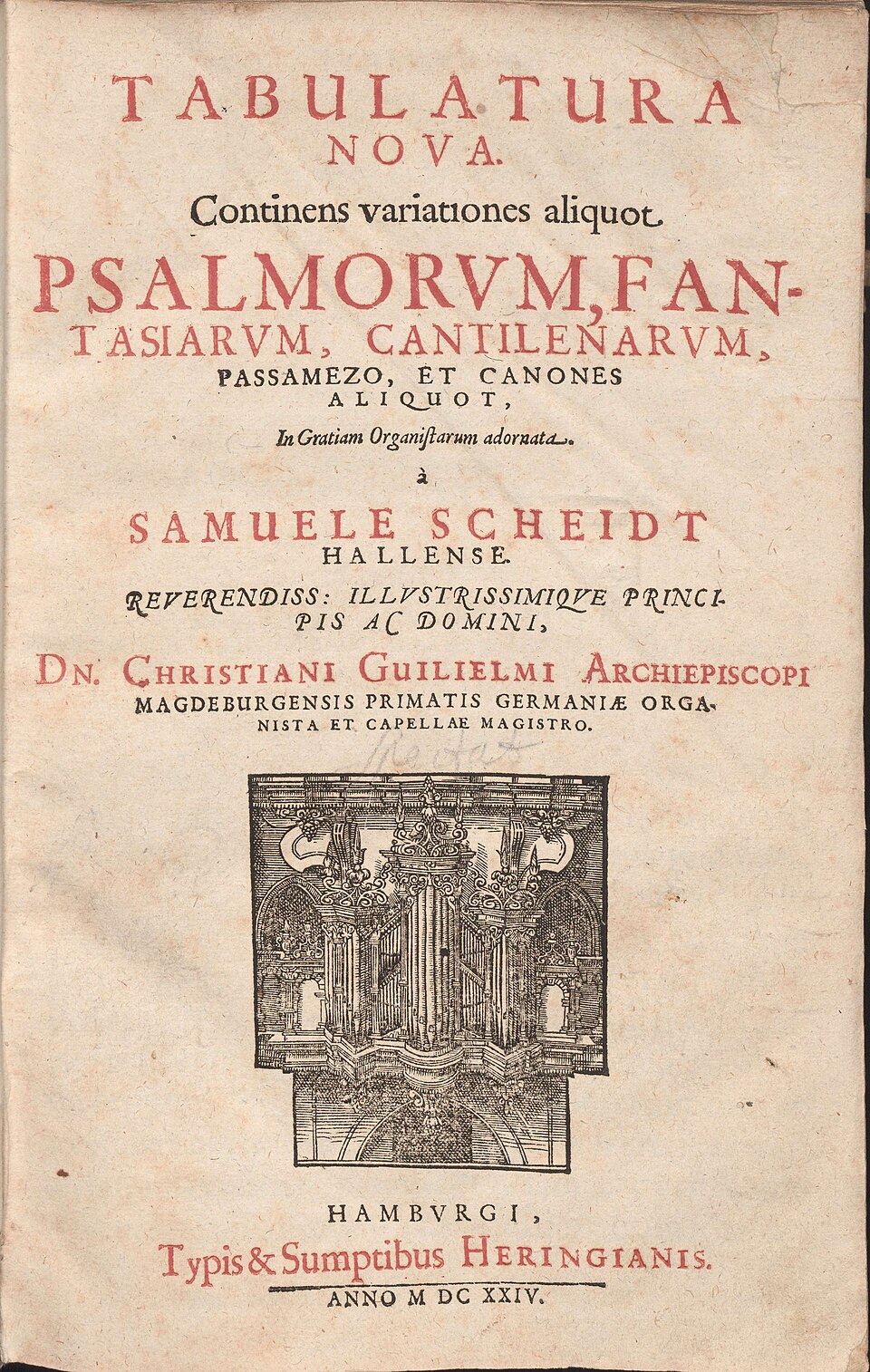
Scheidt’s monument is the Tabulatura Nova, published in three parts at Hamburg in 1624 — one of the most important German keyboard publications in the century before Bach. The “new” in the title was literal and technical: instead of the old German letter-tablature, Scheidt printed his music on open staves in the Italian manner, one voice per line, so that every strand of the counterpoint could be read and studied. The contents range across fantasias, toccatas, echo pieces, dance variations, liturgical Magnificat settings and, above all, variations on chorale melodies — the form that would define German organ music for the next hundred years.
It is here that the inheritance from Sweelinck is plainest: the rigorous variation technique, the long fantasias on a single subject, the way a Lutheran hymn is taken apart and reassembled. Through the Tabulatura Nova, Scheidt handed that technique to the whole of north and central Germany — the line that runs forward through Buxtehude to J. S. Bach.
The war years
Scheidt’s life was scarred by the Thirty Years’ War, which turned central Germany into a battleground for a generation. As the catastrophe deepened, the Halle court establishment collapsed, and Scheidt — in the words of his biographers — survived “by teaching and by taking a succession of smaller jobs” until stability returned and he could resume his Kapellmeister’s post. In 1628 he was appointed music director of the city churches. The personal cost was terrible: in 1636 all four of his children died in an outbreak of plague.
That he kept composing through such years is itself remarkable. His later collections of sacred concertos and the Görlitzer Tabulaturbuch of 1650 — a complete set of harmonised chorales for the organ to support congregational singing — show a master still at work to the end. Scheidt died in Halle on 24 March 1654, having given the German organ its grammar and its first great printed monument.