A guide to
Francisco Corrêa de Araujo
Seville 1584 — Segovia 1654
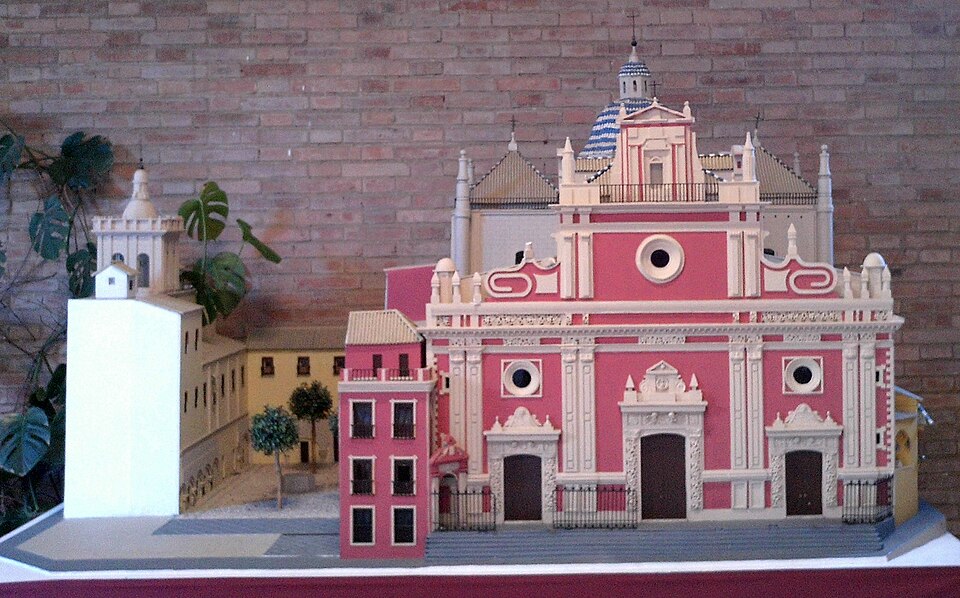
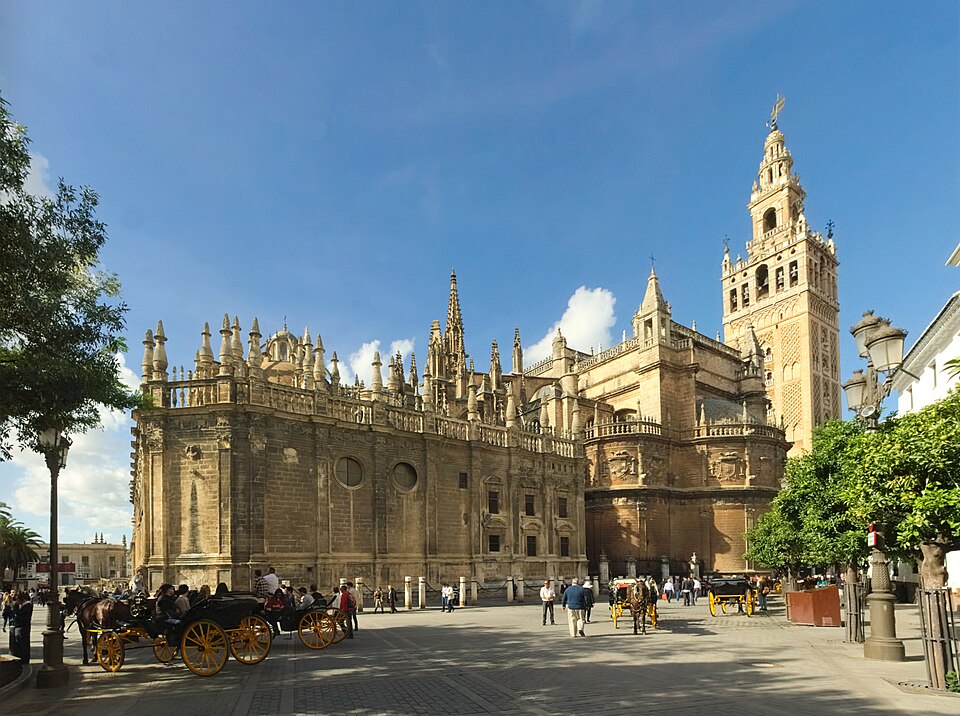
Francisco Correa de Arauxo was the great organist-theorist of Spain’s golden age, and the author of one of the most important keyboard books ever printed on the peninsula. A priest who spent most of his life at the organ of the church of San Salvador in Seville, he gathered his life’s work into the Facultad orgánica of 1626 — a volume that is at once a collection of organ music, a treatise on how to play it, and the fullest record we have of the distinctively Iberian art of the divided keyboard. No portrait of him survives; the great Seville church where he presided still stands.
He was born in Seville around 1584, and baptised probably in the September of that year. His career began in dispute: appointed organist of San Salvador, the city’s second church, his confirmation was delayed for six years by a lawsuit with a rival, Juan Picafort. He took up the post in 1599 and was ordained priest in 1608, holding the Seville organ for some thirty-seven years.
The Facultad orgánica
In 1626 Correa published, at Alcalá de Henares, his Libro de tientos y discursos de música práctica y theórica de órgano intitulado Facultad orgánica — the Facultad orgánica for short. It is a remarkable hybrid: some sixty-two tientos (the Iberian fantasia), arranged in ascending order of difficulty, interleaved with a substantial treatise covering ornamentation, notas desiguales, registration, the modes and key signatures. Among the keyboard works are the medio registro pieces written for the divided keyboard — an innovation peculiar to Spain, in which the manual is split so that one hand can carry a solo voice on one set of stops while the other accompanies on another. It is, by common consent, one of the most important Spanish musical publications of the seventeenth century.
A difficult life
Correa’s life was harried by trouble. The lawsuit that opened his career in 1599 was followed by more: another in 1630, and a brief imprisonment the same year. In 1636 he left Seville for Jaén Cathedral, and in 1640 moved on again to Segovia, where he held a prebend for his last fourteen years. He died there in 1654, reportedly in abject poverty — a sad close for a musician whose single great book would outlast him by centuries as a cornerstone of the Iberian organ school, the tradition that runs on through Cabanilles to the eighteenth century.
What he passed on
Correa stands at the centre of the Spanish organ school, the inheritor of Cabezón’s tientos and the codifier of the medio-registro art that would define Iberian organ music. His insistence on writing down not just the notes but the manner of playing them — fingering, ornament, rhythmic inequality — makes the Facultad orgánica a rare window onto how this music actually sounded in the churches of golden-age Spain. For all the obscurity and hardship of his life, he left the most articulate single account of an entire national keyboard style.