A guide to
Louis-Claude Daquin
Paris 1694 — Paris 1772
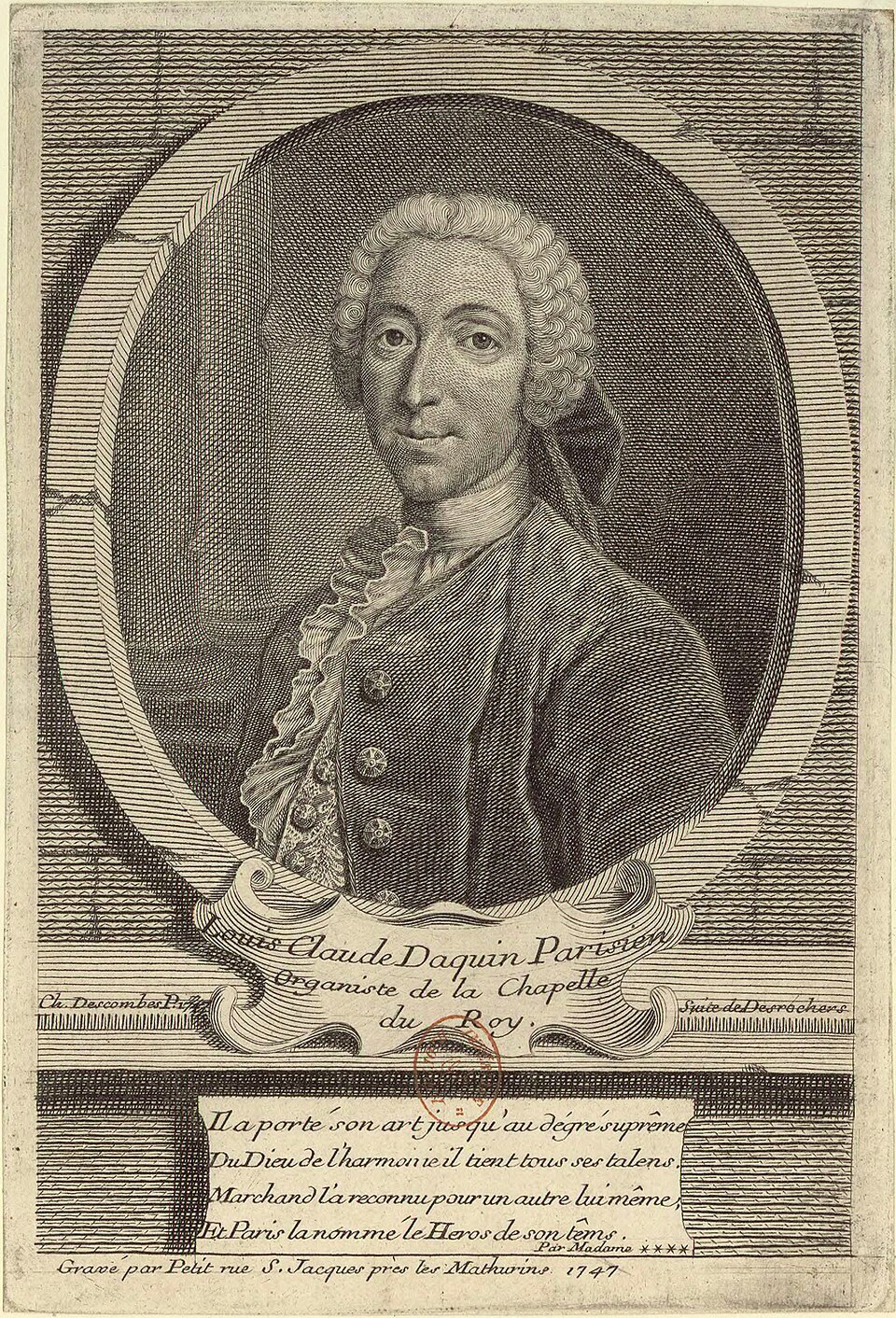
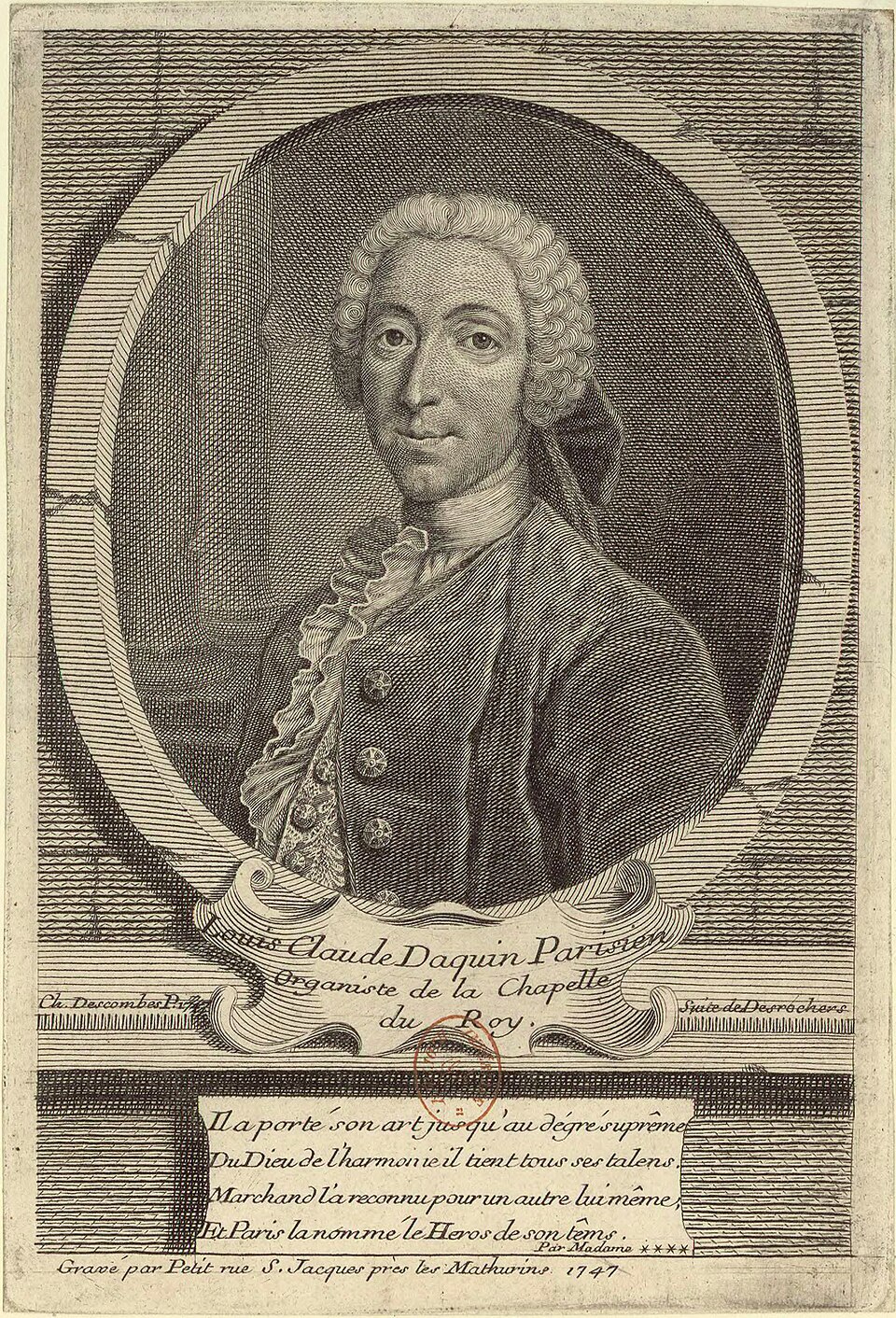
Louis-Claude Daquin was the dazzling keyboard prodigy of Louis XV’s Paris — a virtuoso who drew crowds to the organ loft and left, in a single short rondeau, the most famous piece of bird-music ever written for the keyboard. Born in Paris on 4 July 1694, he was a child wonder of the kind the age delighted in: by his own legend he played for the aged court of Louis XIV at the age of six, and at twelve he was already titular organist of the Sainte-Chapelle, the royal chapel on the Île de la Cité. The boy who astonished the Sun King’s court would, in old age, hold the grandest organ posts in the capital.
He studied with Louis Marchand, the greatest and most cantankerous of French organ virtuosi, and in time inherited from him both a brilliant technique and, in 1732, his very post at the Cordeliers. Contemporaries remembered Daquin above all as a performer: by reputation a dazzling player whose great expertise at the organ drew large crowds to hear him, courted by the aristocracy, prized for the unfaltering precision and evenness of his touch.
The race for the lofts
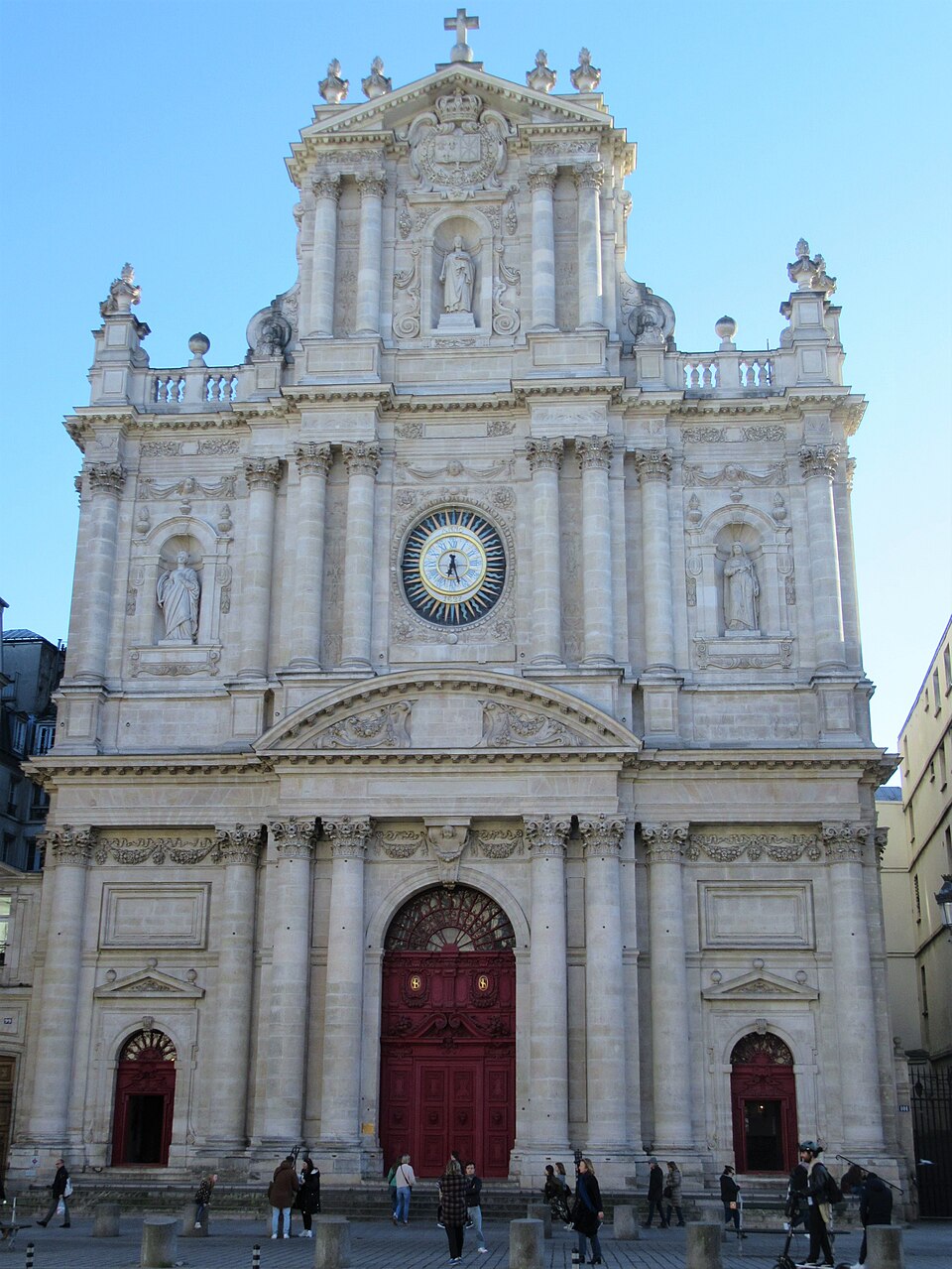
Daquin’s career was a steady climb through the most coveted organ lofts of Paris, won — as such posts were — by competition and reputation. In 1727 he was appointed organist at the church of Saint-Paul, ahead of a field of candidates that, by the account of his own biographers, included Jean-Philippe Rameau — a story told from Daquin’s side and not corroborated in Rameau’s, but a measure of the company he kept. The royal honour came in 1739, when he was made one of the organists to Louis XV at the Chapelle Royale, and the summit in 1755, when he succeeded to the great organ of Notre-Dame de Paris itself. For a man who had played before one king as a child and served the next at the keyboard, it was the natural crown.
Le Coucou and the harpsichord book
The piece that carried his name down the centuries is a miniature. In 1735 Daquin published his Premier livre de pièces de clavecin — twenty-eight harpsichord pieces grouped into four suites, in the picturesque, title-bearing manner that Couperin had made the French keyboard’s signature. The third suite opens with Le Coucou, a rondeau built on the falling two-note call of the cuckoo, returning between its busy episodes with the obstinate cheerfulness of the bird itself. It is the one universally known piece Daquin wrote, played by every generation of students since.
The book holds more than its one hit. There is the strummed La guittare, the storm-piece Les vents en couroux, a pastoral Musette en rondeau over its drone, and a whole hunting divertissement, Les plaisirs de la chasse, with its calls of horns and hounds. Listen for how the descriptive titles are not labels stuck on afterward but the very subject of the music — the French clavecin school painting in sound.
The Noëls
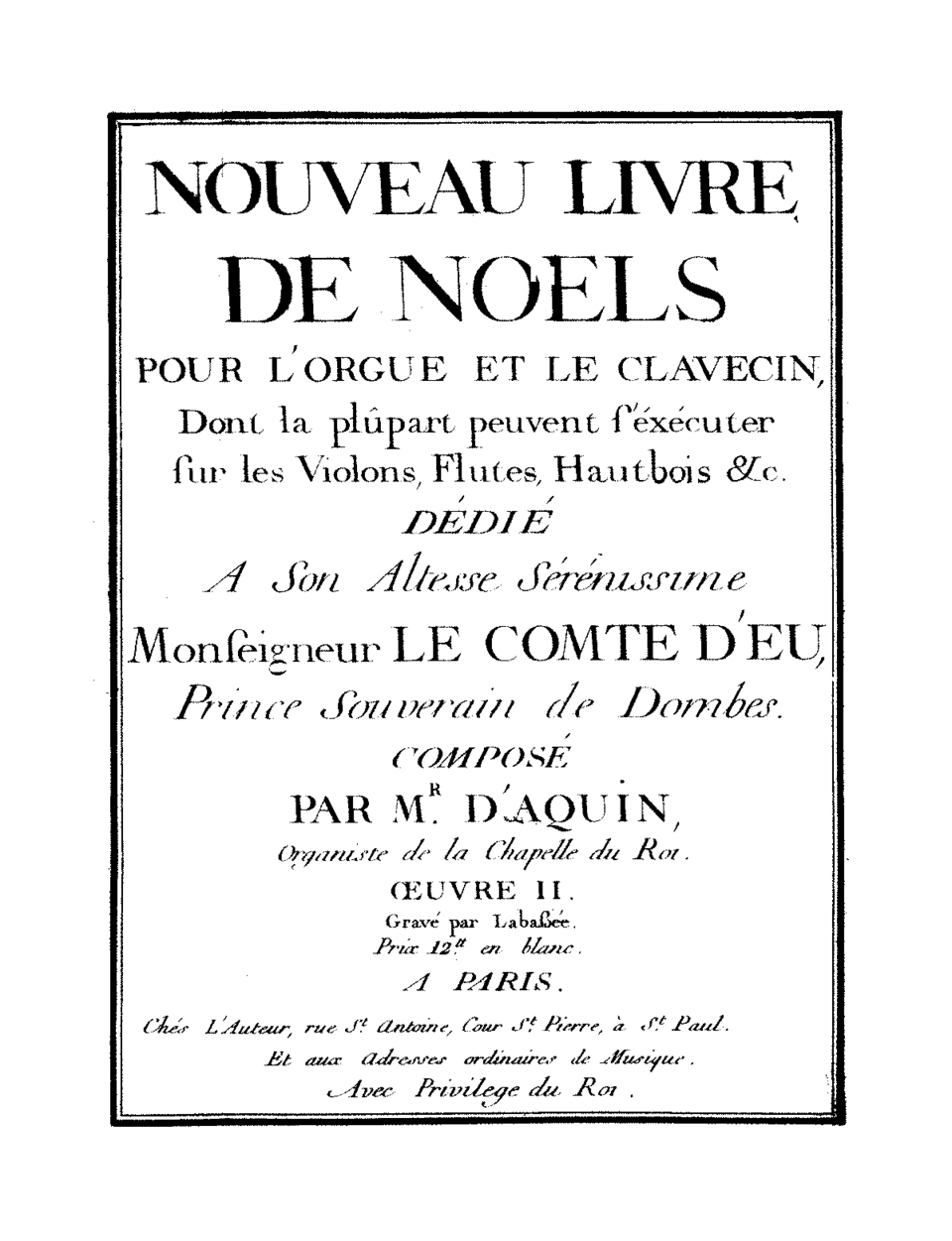
Daquin’s other enduring legacy is for the organ: the Nouveau livre de Noëls, published around 1757, a set of variations on the popular Christmas carols, “pour l’orgue et le clavecin.” The genre was a French institution — at midnight Mass an organist would spin the simple noël tunes into ever more brilliant variations — and Daquin’s are among the most beloved examples, their headings naming the very registrations the player should draw (the dialogue of cornet and cromorne, the blazing grand jeu). The Noël Suisse is the most famous of the set. They are virtuoso pieces dressed as folk song, the work of a man who had spent his life making crowds gather to hear him play.
He died in Paris on 15 June 1772, nearing seventy-eight, still organist of Notre-Dame. The prodigy who had charmed the court of Louis XIV outlived his whole brilliant century of French keyboard music — and is remembered today, fittingly, for the most charming thing in it: a cuckoo that has never stopped calling.