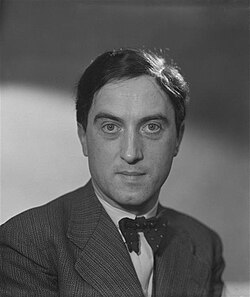

A guide to
Maurice Duruflé
Louviers 1902 — Louveciennes 1986
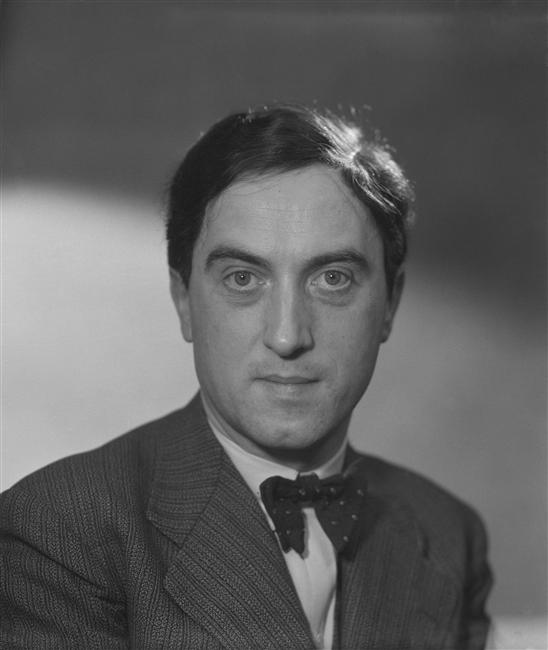
Maurice Duruflé wrote almost nothing, and almost all of it is perfect. His published catalogue runs to roughly a dozen opus numbers — a handful of organ works, a few choral pieces, the great Requiem — assembled across a long life by a composer so unsparing with himself that he kept editing pieces years after they were in print. He was “highly critical of his own compositions,” in the plain words of his biographers; he so disliked the famous Toccata of his own Suite that he never recorded it. What survives is music of extraordinary refinement, soaked in the Gregorian chant he had absorbed as a cathedral chorister and never left behind.
He was born in Louviers, in Normandy, on 11 January 1902. At ten he entered the choir school of Rouen Cathedral, where the daily round of plainsong shaped his ear for life, and where he studied piano and organ. In 1920 he went to the Paris Conservatoire, taking first prizes in organ under Eugène Gigout (1922) and, in 1928, in composition under Paul Dukas. Before that he had become, at seventeen, a private pupil of Charles Tournemire — the mystic organist of Sainte-Clotilde, Franck’s old church — and Duruflé served as Tournemire’s assistant there.
The organ loft at Saint-Étienne-du-Mont
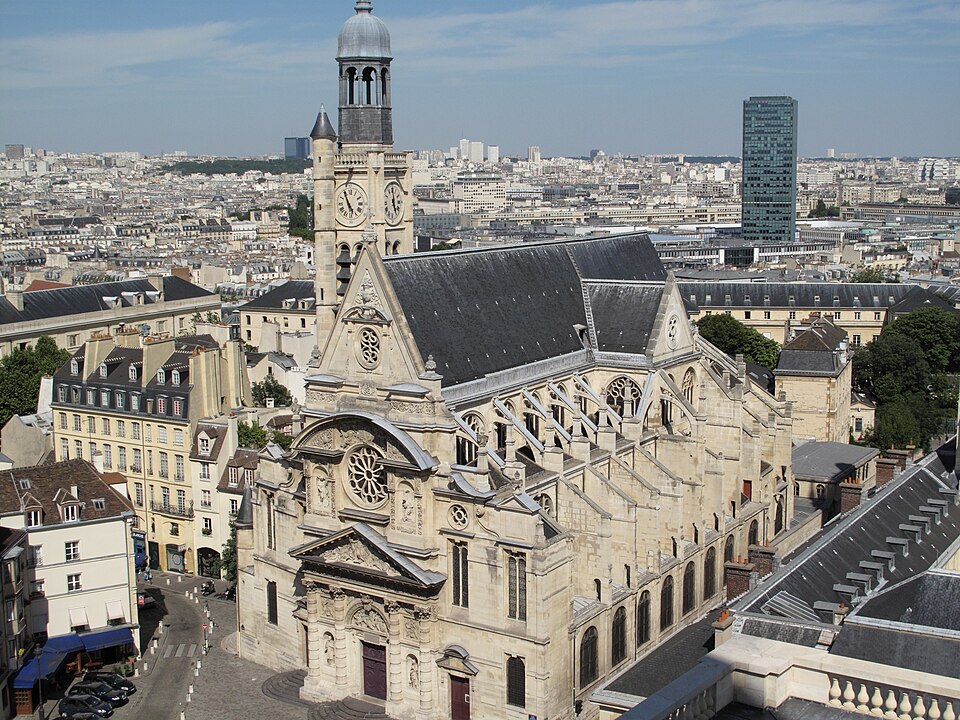
In 1929 Duruflé was appointed organist of Saint-Étienne-du-Mont, the late-Gothic church on the Montagne Sainte-Geneviève in Paris, and he held the post for the rest of his life. He was also, from 1927, an assistant to Louis Vierne at Notre-Dame — and it was Duruflé who was at Vierne’s side when the great blind organist died at the console during a recital on 2 June 1937, in the way Vierne had always said he hoped to go.
The organ works he produced in these years are few and faultless. The Prélude, adagio et choral varié sur le ‘Veni Creator’, Op. 4, and the Suite, Op. 5 — whose blazing Toccata Duruflé came to disown — stand at the centre of the twentieth-century French organ repertory. Most personal of all is the Prélude et fugue sur le nom d’Alain, Op. 7 (1942), written in memory of his friend Jehan Alain and built on a musical cipher spelling out the letters of A-L-A-I-N, with the spirit of Alain’s own music woven through the fugue — an elegy for a fellow organist of his own generation, gone far too soon.
The Requiem
The work the world knows is the Requiem, Op. 9, completed in 1947 and dedicated to the memory of his father. Like nearly everything Duruflé wrote, it is grown almost entirely from Gregorian chant — the melodies of the plainsong Mass for the Dead, which he had sung as a boy at Rouen, float through the whole score, harmonised with a luminous, modal tenderness that owes as much to Fauré as to the medieval Church. (Indeed Duruflé had been at work on an organ suite on these very chants when the commission came, and folded the sketches into the Requiem.) It exists in versions for full orchestra, for reduced orchestra, and for organ alone — and in any of them it is, by a wide margin, the most beloved of his few pieces, the rare modern Requiem that has entered the affections of choirs and congregations alike.
The duo, and the silence
Duruflé taught harmony at the Conservatoire from 1943, where his pupils included Pierre Cochereau, Jean Guillou and Marie-Claire Alain — Jehan’s sister. In 1953 he married Marie-Madeleine Chevalier, herself a fine organist who had become his assistant at Saint-Étienne-du-Mont; the two became a celebrated organ duo, touring together through the 1960s and into the 1970s.
It ended abruptly. On 29 May 1975 the Duruflés were badly injured in a car crash, and the severe injuries ended Maurice’s performing career; he spent his last years largely confined to his apartment, the composing all but stopped. He died at Louveciennes, near Paris, on 16 June 1986, leaving a body of work small enough to hold in two hands and finished to a degree almost no one else in his century could match.