A guide to
Charles Tournemire
Bordeaux 1870 — Arcachon 1939
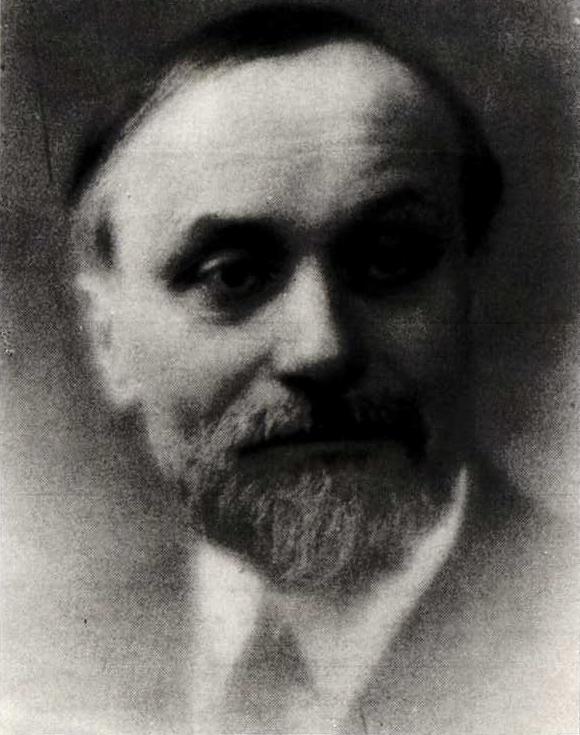
Charles Tournemire was the great mystic of the French organ — a composer for whom the instrument was less a means of display than of prayer. For more than forty years he held the loft of the Basilica of Sainte-Clotilde in Paris, the church of his master César Franck, and from it he produced one of the towering monuments of twentieth-century church music: L’Orgue mystique, an organ for the whole liturgical year, built entirely on Gregorian chant. He was also, by the testimony of everyone who heard him, an improviser of genius — and we know it because some of those improvisations were caught on disc and saved.
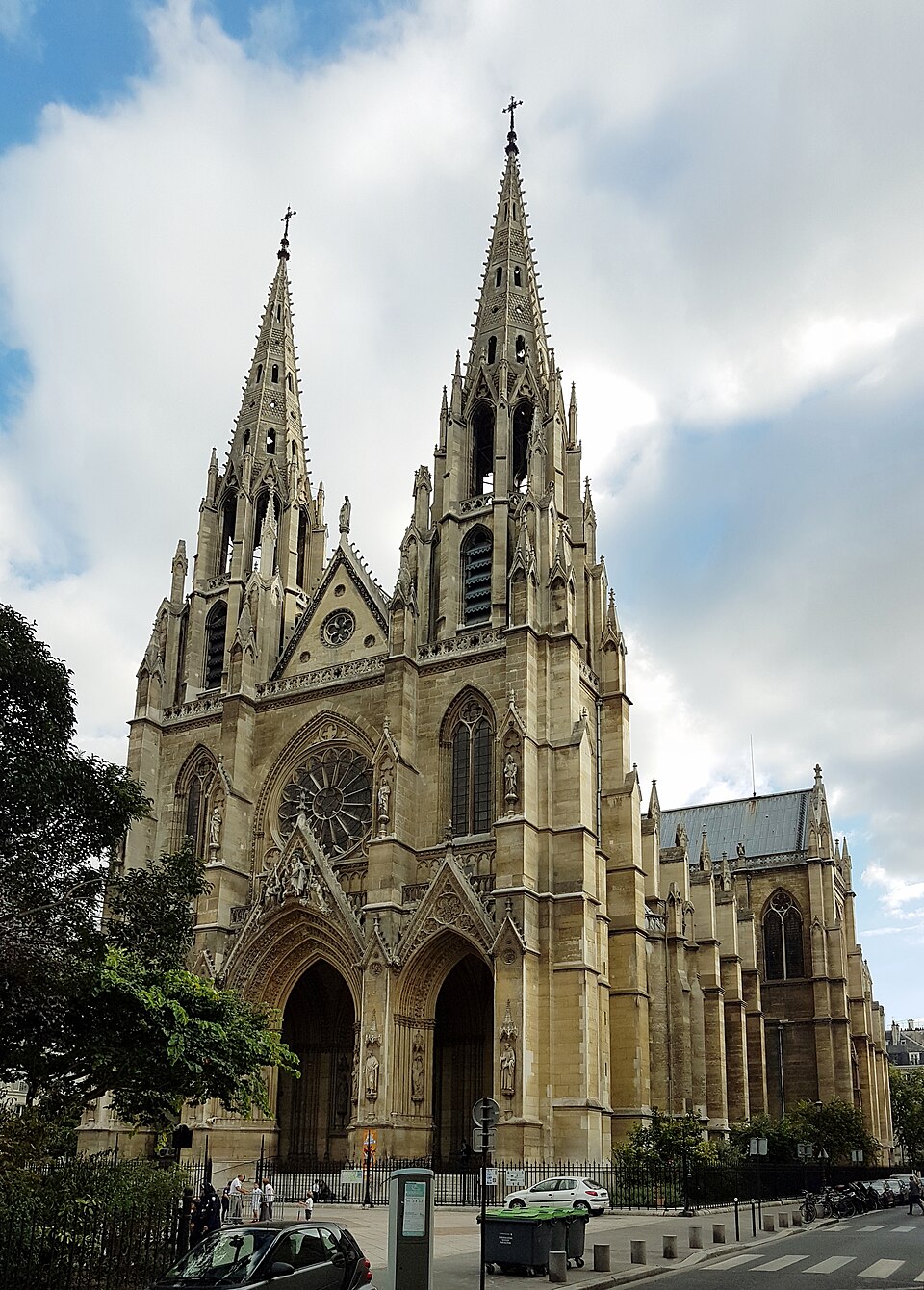
He was born in Bordeaux on 22 January 1870 and went to Paris to study, where he became one of the very last and youngest pupils of César Franck at the Conservatoire, alongside Guillaume Lekeu and Henri Büsser. Franck’s blend of chromatic harmony and devout Catholicism marked Tournemire for life. When Franck died in 1890 the Sainte-Clotilde succession passed first to Gabriel Pierné; then, in 1898, the post came to Tournemire, who would hold it until his death and thereby keep the Franck tradition alive at its very source.
Sainte-Clotilde and L’Orgue mystique
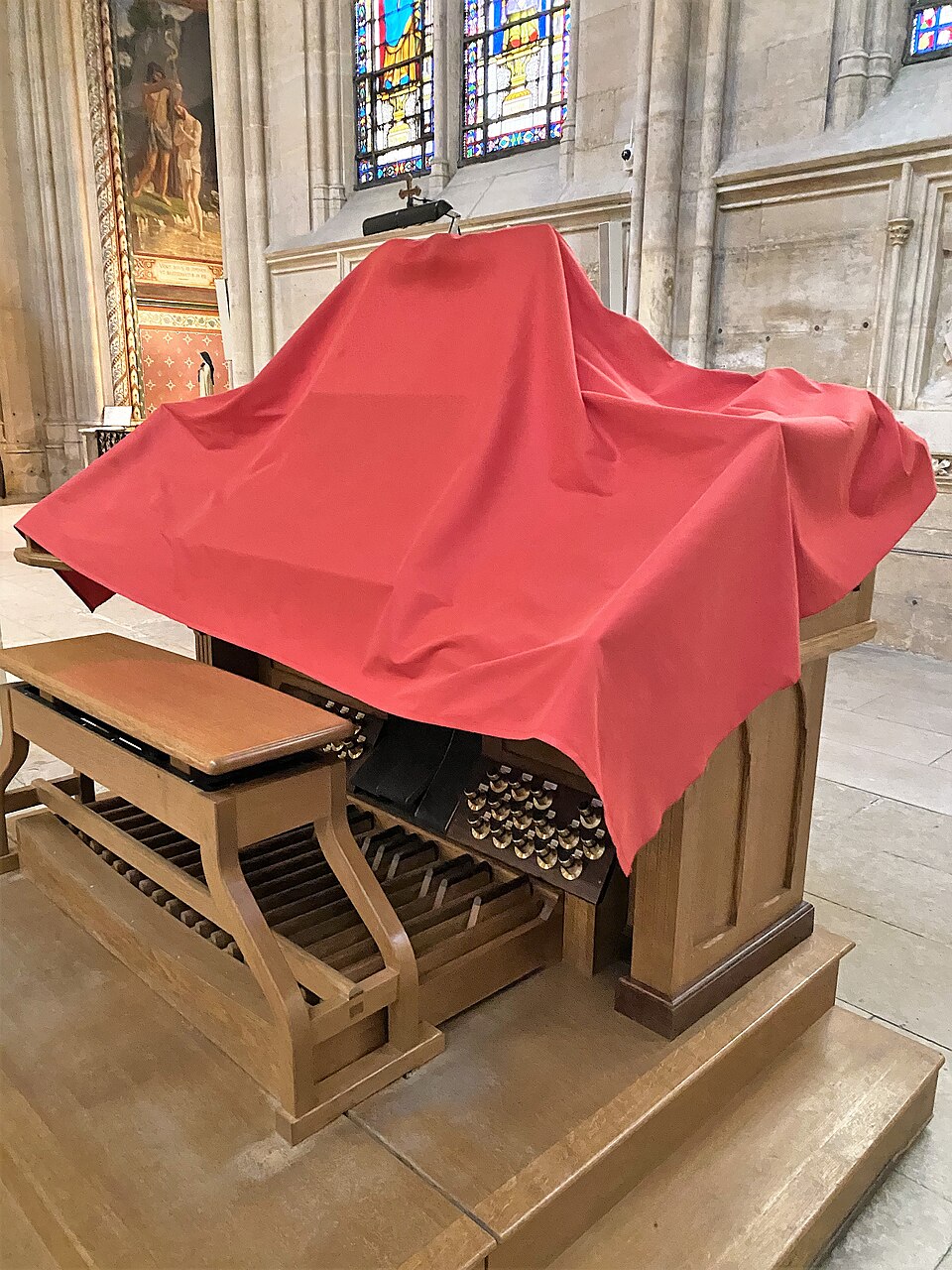
The instrument at Sainte-Clotilde was the Cavaillé-Coll on which Franck had composed his greatest works, and Tournemire treated it as a vessel for the sacred. His masterpiece, L’Orgue mystique, is unlike anything else in the repertory: 51 cycles of organ pieces, one for almost every Sunday and major feast of the Catholic year, each built from the Gregorian chant proper to that day — an entire liturgical calendar set for the organ. He wrote the whole colossal cycle in a single sustained outpouring between 1927 and 1932.
The music dissolves the bar line. Plainsong melodies float over modal harmonies of great delicacy and strangeness; the writing can be hushed and contemplative or rise to ecstatic, glittering climaxes. Where Widor had made the organ a symphony orchestra, Tournemire turned it back toward the altar — but with a harmonic language entirely of the new century. His later Sept Chorals-Poèmes on the Seven Last Words deepen the same inward, visionary manner.
The improviser on disc
Tournemire’s contemporaries regarded his improvisations at Sunday Mass as the supreme experience of his art — spontaneous, chant-based, often surpassing the written works. Most such genius vanishes with the moment. But in 1930–31 Tournemire sat at the Sainte-Clotilde console and recorded a handful of improvisations onto 78 rpm discs. Decades later his own pupil Maurice Duruflé painstakingly transcribed five of them, note for note, from those scratchy recordings, publishing the result in 1958 as the Cinq Improvisations. The thunderous Improvisation sur le Te Deum and the Victimae Paschali laudes have become repertory staples — and they remain the nearest thing we have to standing in the basilica while Tournemire improvised.
From 1919 he taught chamber music at the Paris Conservatoire, and his influence ran straight into the next generation of French organists: among his pupils were Duruflé, Jean Langlais and Daniel-Lesur, who carried his chant-based, mystical idiom forward. His larger catalogue — eight symphonies, four operas, chamber works — is little played; it is the organ music, and the legend of the improviser, that endure.
A strange end
Tournemire’s death is one of the unsolved mysteries of French music. On 31 October 1939, at his retreat near Arcachon on the Atlantic coast, he left the house for a walk and did not return. His body was found in a bog several days later, on 4 November. Whether it was accident, illness or something darker has never been established. He was sixty-nine.
He left the organ loft of Sainte-Clotilde having held it, in unbroken descent from Franck, for forty-one years, and he left behind in L’Orgue mystique a work that no one has matched: a whole liturgical year of the Church set to music, by a composer who heard the organ as the voice of prayer.