A guide to
Matthias Weckmann
Niederdorla, Thuringia 1616 — Hamburg 1674
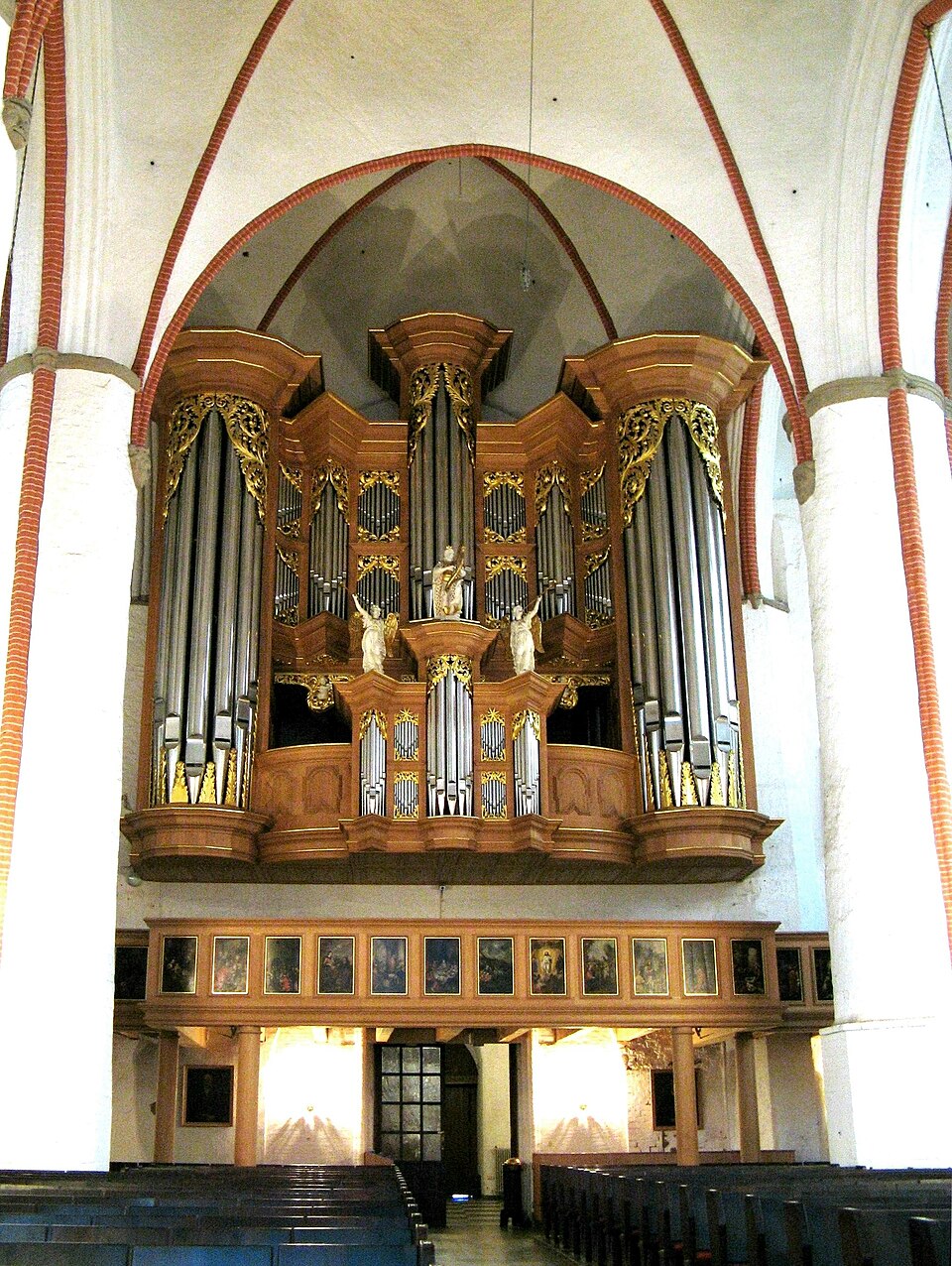
Matthias Weckmann was the central organist of mid-seventeenth-century Hamburg and one of the most cultivated musical minds of the German Baroque — a composer who drew the Italian, the French and the North German together into a single, refined personal style. He was born around 1616 in Niederdorla, in Thuringia, and his training placed him at the very source of German music: as a boy he was a chorister under Heinrich Schütz at the Saxon court in Dresden, and in 1637 he travelled north to Denmark in Schütz’s company.
In Hamburg he studied with the organist Jacob Praetorius at the Petrikirche, absorbing the North German pedal tradition that descended from Sweelinck. From 1638 he served as organist at the Electoral Saxon court in Dresden, with a further long Danish interval during the upheavals of the Thirty Years’ War, before the post that defined him.
Dresden, Froberger, and the golden chain
The most famous episode of Weckmann’s life is preserved by Johann Mattheson in his great biographical dictionary, the Grundlage einer Ehren-Pforte (Hamburg, 1740). During Weckmann’s years at Dresden he met the imperial keyboard virtuoso Johann Jakob Froberger, and the two became lifelong friends and correspondents. According to Mattheson, the Elector proposed that the two play against each other on the keyboard for a golden chain — a contest of the age’s two finest players. Weckmann, the story goes, agreed willingly, but said that out of respect he hoped Froberger would win the chain. The rivalry dissolved into friendship; through Froberger, Weckmann gained a first-hand knowledge of the Italian and French styles that marks his own music apart from his northern contemporaries.
Hamburg and the Collegium Musicum
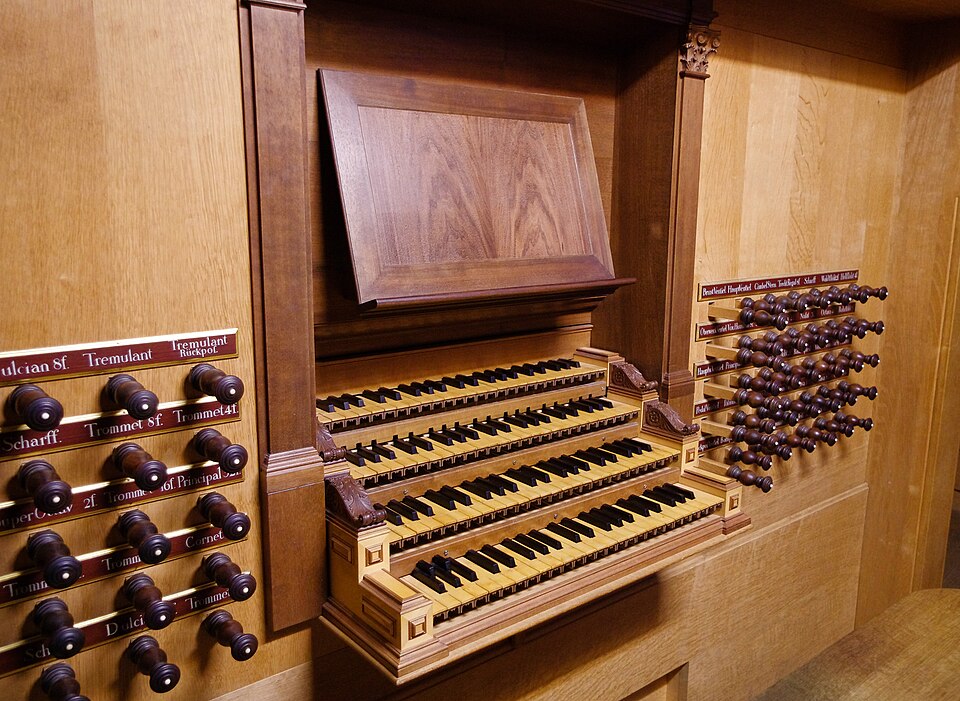
In 1655, after a competition, Weckmann was appointed organist of the Jacobikirche in Hamburg — formally on 27 November — and he held the post until his death. There, in 1660, he founded a Collegium Musicum, a public concert society that became one of the most renowned ensembles in the city and helped make Hamburg a centre of bourgeois music-making for generations. He was at the heart of the same Hamburg organ world as Reincken and Scheidemann.
The plague struck the city hard: in 1663 it killed Weckmann’s first wife and the great organist Heinrich Scheidemann, among other colleagues, and he set sacred texts in response to the catastrophe. He died in Hamburg on 24 February 1674.
What survives is a body of music of unusual sophistication: sacred concertos and cantatas, sonatas for three and four instruments, and for the keyboard a group of toccatas, preludes, fugues, canzonas and, above all, large chorale elaborations. In them the disciplined North German treatment of the Lutheran hymn meets a harmonic richness and an Italianate suppleness of line that came, in part, from a friendship and a golden chain declined at Dresden.