.jpg)
A guide to
Charles-Marie Widor
Lyon 1844 — Paris 1937
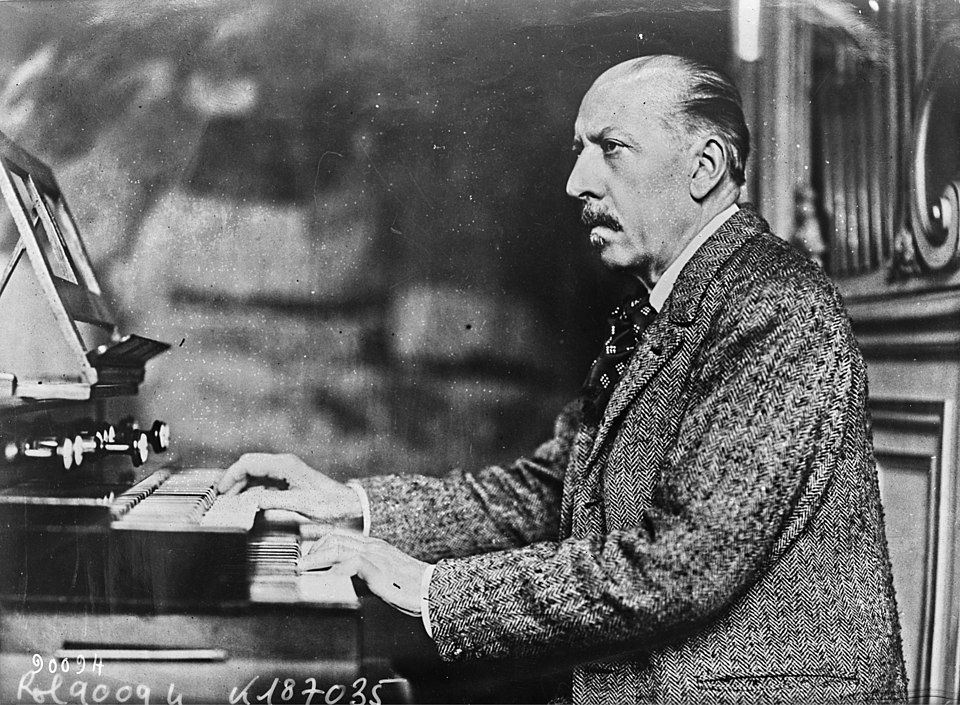
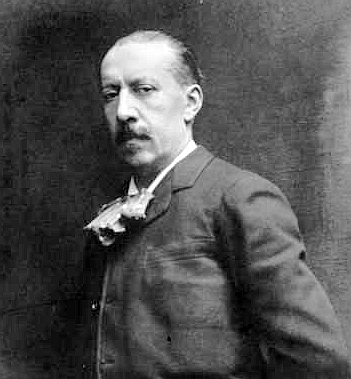
Charles-Marie Widor held the great organ of Saint-Sulpice in Paris for nearly sixty-four years — an appointment that began, in January 1870, with the title “provisional.” He was twenty-five. He gave it up at the end of 1933, aged eighty-nine, having outlasted four French republics and very nearly the entire Romantic century he was born into. In between he wrote the ten organ symphonies that redefined what the instrument could do, taught most of the next generation of French organists, and became one of the supreme custodians of the Paris musical establishment. The single piece of his that the world knows — the Toccata from the Fifth Symphony — is a fraction of the story, and he knew it.
He was born in Lyon on 21 February 1844, into a family of organ builders. His father was titular organist of Saint-François-de-Sales in the city, and the great builder Aristide Cavaillé-Coll — whose instruments would become the medium of Widor’s entire life’s work — was a friend of the household. In 1863 the young Widor was sent to Brussels, where he studied organ technique with Jacques-Nicolas Lemmens (heir to a Bach-rooted pedagogical tradition) and composition with the venerable François-Joseph Fétis, then director of the Brussels Conservatoire. He returned to France a complete musician, and Cavaillé-Coll’s connections did the rest.
Saint-Sulpice and the symphonic organ
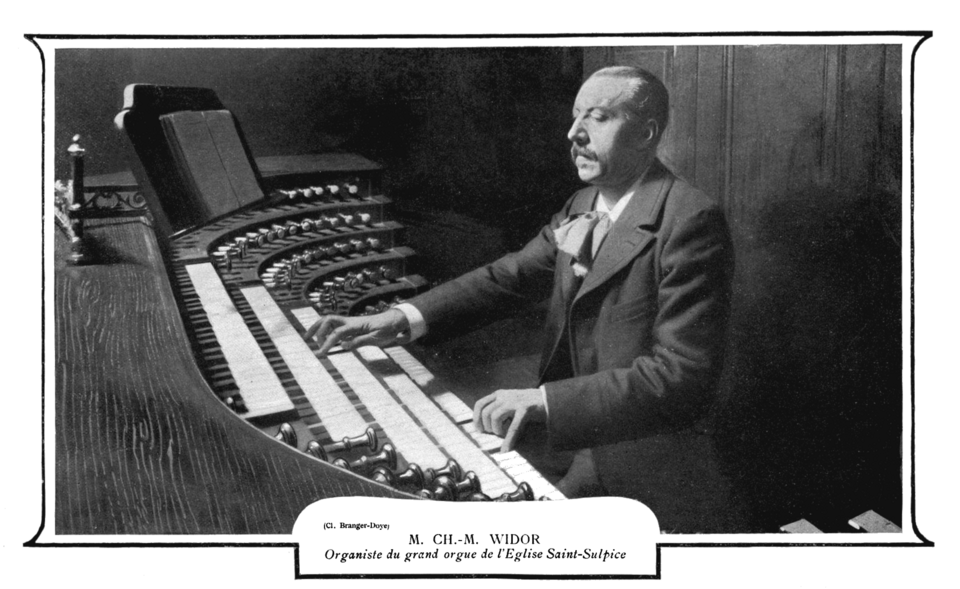
The instrument at Saint-Sulpice was Cavaillé-Coll’s masterpiece — a hundred stops of orchestral colour, harmonic flutes, blazing reeds, a swell box that could shade from a whisper to a roar. It was, in effect, a one-man orchestra, and Widor treated it as one. The ten works he called symphonies — the first four published as Op. 13 in 1872, the next four as Op. 42 — are not symphonies in the German sense but suites of contrasted movements conceived for the timbres of a Cavaillé-Coll. Widor, characteristically precise, knew the term was a stretch: he himself referred to the early sets as “collections.” But the ambition was real. No one had written for the organ on this scale, with this orchestral palette, since Bach.
The Fifth Symphony, Op. 42 No. 1, ends with the Toccata that became, against its composer’s expectations, one of the most famous pieces of organ music ever written — a recessional at weddings the world over and a fixture of the Christmas Midnight Mass at St Peter’s in Rome. Widor was pleased by the renown and irritated by the performances: organists, he complained, played it far too fast. He always took it deliberately himself, and when he recorded it at Saint-Sulpice in his eighty-ninth year, he set a tempo that startled younger players with its breadth.
The teacher
In 1890, on the death of César Franck, Widor succeeded him as professor of organ at the Paris Conservatoire; six years later he gave up that chair to become professor of composition, succeeding Théodore Dubois. From these two posts, and from the loft at Saint-Sulpice, came a lineage. Among his organ pupils were Louis Vierne, Charles Tournemire, and Marcel Dupré — who would in due course succeed him at Saint-Sulpice — along with Albert Schweitzer, the future medical missionary and Bach scholar, who studied with Widor from 1899.
The Schweitzer connection bore unexpected fruit. The two collaborated on an annotated edition of Bach’s organ works, published between 1912 and 1914, that became a standard for a generation. The story behind it, often retold, is that Schweitzer’s explanations of how Bach’s figuration paints the words of the chorale so struck Widor that he urged the young man to write the whole thing down — the seed of Schweitzer’s celebrated Bach study. Whatever the exact words, the partnership of the elderly French symphonist and the German theologian over Bach’s scores is one of the quietly moving episodes in the history of the instrument.
The grand old man of French music
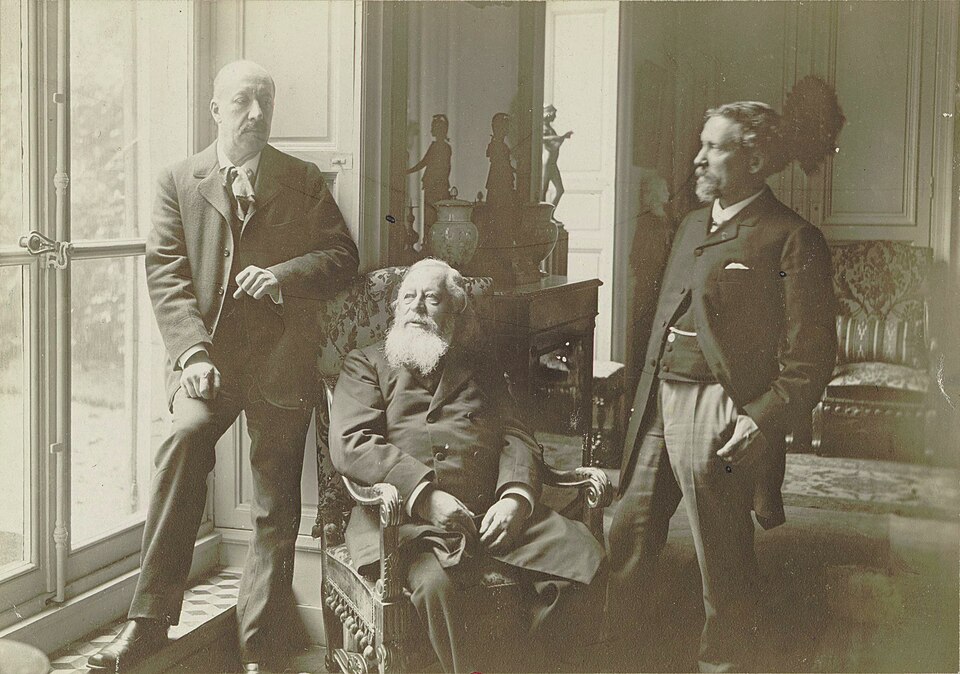
Widor’s later life was a procession of honours. He was named to the Institut de France in 1910 and elected permanent secretary of the Académie des Beaux-Arts in 1914, a position of real cultural authority that he held into old age. In 1921 he helped found the American Conservatory at Fontainebleau and served as its first director — the school whose direction passed, in 1934, to Maurice Ravel. And in 1920, at the age of seventy-six, this lifelong bachelor of the organ loft married Mathilde de Montesquiou-Fézensac, forty years his junior and a descendant of one of the oldest families in France.
His two late organ symphonies turn away from display toward the chant of the Church. The Ninth, “Gothique,” Op. 70 (1895), grows from the Christmas Introit Puer natus est; the Tenth, “Romane,” Op. 73 (1900), from the Easter Gradual Haec dies, the plainsong slowly emerging to govern the entire piece. They are the work of a man who had spent half a century in a church loft and had come to hear the symphonic organ and the Gregorian repertory as one tradition.
He retired from Saint-Sulpice at the end of 1933, after nearly sixty-four years, handing the bench to Dupré. He died in Paris on 12 March 1937, in his ninety-fourth year, and was interred in the crypt of the church he had served for two-thirds of his life. By a small final irony, the inscription on his tomb gives his birth year wrongly as 1845 — a misprint guarding the rest of one of the longest, most consequential careers in French music.