Musical Europe · Castile · Valencia · Lisbon · El Escorial
Tientos, diferencias and royal keyboards
A peninsula heard through organs, variations and sonatas
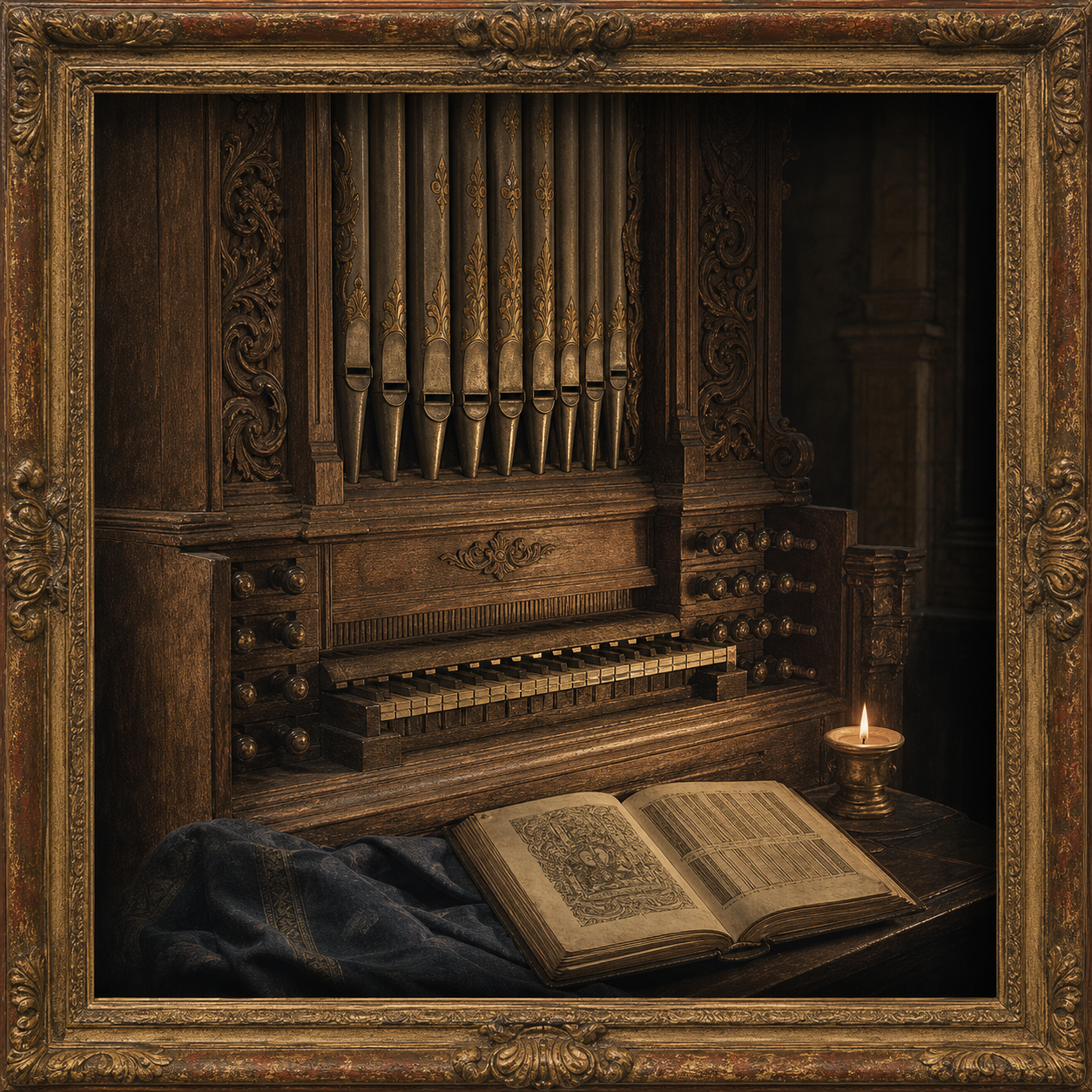
Divided stops, short bass octaves and horizontal reeds shaped Iberian keyboard writing. Surviving instruments reveal why a tiento can change colour without changing player.
7 linked composers · 370 playable or downloadable scores
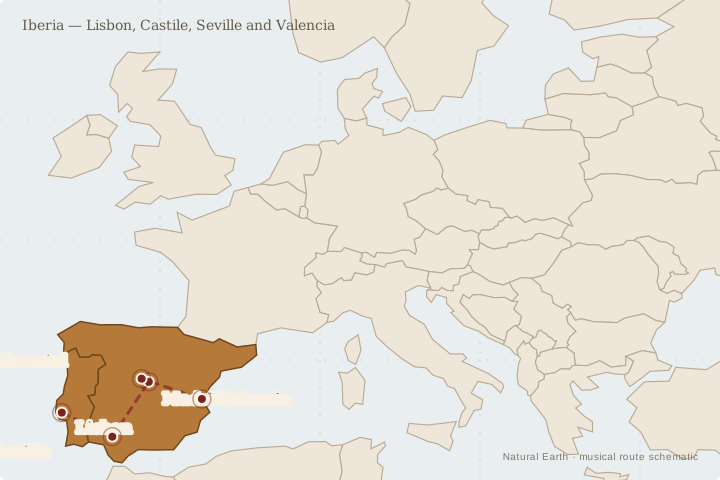
Composers through time
Half-century groups use the midpoint of each composer's recorded lifespan as an orientation, not a composition date. Within each group: earliest birth first.
1500–1549
1550–1599
1600–1649
1650–1699
1700–1749
1750–1799
Stories, places & programmes
Open a chapter to follow the story or play a short programme.
The art of diferencias · Sixteenth-century Spain
Sixteenth-century Spain
The art of diferencias
Antonio de Cabezón made variation technique, contrapuntal invention and keyboard touch inseparable. His diferencias transform familiar material without losing its outline, while his liturgical pieces show a player working within a European sacred tradition.
Play this room3 scores chosen as a miniature recitalPortugal and the eighteenth-century sonata · Lisbon · Madrid · El Escorial
Lisbon · Madrid · El Escorial
Portugal and the eighteenth-century sonata
Manuel Rodrigues Coelho's printed collection is a landmark of Portuguese keyboard music. A century later, Carlos Seixas and Antonio Soler placed Iberian keyboard writing within the international history of the sonata—without erasing its local rhythmic and instrumental character.
Play this room3 scores chosen as a miniature recitalThe tiento and the divided keyboard · Seville · Valencia · seventeenth century
Seville · Valencia · seventeenth century
The tiento and the divided keyboard
The tiento could be rigorous, exploratory and intensely idiomatic. Correa de Arauxo and Cabanilles exploited counterpoint and the colours of Iberian organs, including textures associated with divided stops, where treble and bass could receive contrasting registrations.
Play this room3 scores chosen as a miniature recitalThe instrument room · builders and surviving instruments
The objects behind the music
Divided stops, short bass octaves and horizontal reeds shaped Iberian keyboard writing. Surviving instruments reveal why a tiento can change colour without changing player.
Barcelona · 1712 and 1721
Two surviving organs by Josep Boscà
Portugal · builders and locations
A searchable historical-organ project
Continue into the archives
Find an instrument or builder
External registers are linked for research; their text and photographs are not copied here. Instrument records change as restorations and scholarship advance.